
- Sophia@polyflute.com
- +86 15162372874
- Mon - Sat 8:00-20:00

Efficient warehouse storage depends on more than shelving capacity. Businesses also need a practical way to organize small parts, identify inventory, and retrieve products without wasting time. Warehouse rack bins provide a flexible storage solution for distribution centers, manufacturing facilities, workshops, retail stockrooms, and e-commerce fulfillment operations. When selected and arranged correctly, they help improve inventory visibility, reduce picking errors, and make better use of available warehouse space.
However, choosing suitable bins requires consideration of rack dimensions, product characteristics, load requirements, picking methods, and future inventory changes. This guide explores practical warehouse rack bins solutions and explains how businesses can build an organized, efficient, and scalable storage system.
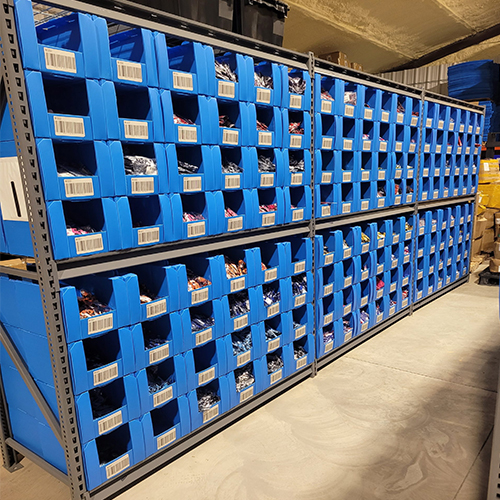
Warehouse rack bins are containers designed to organize products and components on shelving units, industrial racks, or designated storage systems. They are commonly used for fasteners, electrical components, automotive parts, packaging supplies, tools, and other small inventory items.
Unlike ordinary storage boxes, rack bins are intended to support structured inventory management. Their open fronts, accessible compartments, and clearly identifiable labels allow workers to locate and retrieve products efficiently.
A complete warehouse rack bins solution involves more than purchasing containers. It combines appropriate bin sizes, compatible shelving, logical product allocation, labeling methods, and consistent inventory procedures.
For example, a warehouse handling hundreds of different screws and fittings may assign individual bins to each product type. This arrangement prevents similar components from becoming mixed and helps employees complete orders with greater accuracy.
Different inventory categories require different storage configurations. Selecting the right type of bin is the first step toward building an effective system.
Open-front bins allow employees to access products directly without removing containers from shelves. They are suitable for frequently picked items, including nuts, bolts, connectors, electronic components, and small machine parts.
Their front openings make inventory identification easier and reduce unnecessary handling during order fulfillment.
Stackable bins help businesses organize inventory vertically when compatible shelving or floor storage arrangements permit. They can be useful for backroom inventory, replenishment stock, and areas where containers need to be moved between workstations.
Before stacking, businesses should verify the manufacturer’s load limits and confirm that the containers remain stable under the intended operating conditions.
Divided bins separate different components within a single container. They are particularly useful for maintenance departments, assembly lines, and facilities managing small products with similar appearances.
Removable dividers can provide additional flexibility when inventory quantities or product dimensions change.
Heavy-duty bins are designed for applications involving heavier components or more demanding handling conditions. Their suitability depends on material construction, dimensions, load capacity, and the frequency of movement.
Businesses should check product specifications rather than assuming that every industrial-looking container can withstand the same load.
Compatibility between bins and shelving is essential for safe and efficient storage. Bins that are too wide may obstruct adjacent positions, while containers that are too deep can make rear inventory difficult to access.
Before purchasing warehouse rack bins, measure the usable width, depth, and height of each storage location. Account for shelf supports, uprights, brackets, and any restrictions that reduce usable space.
The dimensions of the products being stored also matter. A bin should provide sufficient room for inventory without encouraging unnecessary mixing or excessive empty space.
For small components, several compact bins may provide better organization than one oversized container. Conversely, larger bins may be more practical for bulky fittings or products with higher picking volumes.
Businesses should also consider whether bins need to slide in and out of shelving, remain permanently positioned, or be transferred between storage and assembly areas. These requirements influence the most suitable container design.
A well-designed storage system places products where employees can locate and retrieve them efficiently. Warehouse rack bins support this goal when inventory is arranged according to demand, product relationships, and picking frequency.
ABC analysis groups inventory according to its relative importance, often using consumption value or another business-defined criterion. High-priority items can receive more accessible storage positions, while less frequently required products can be placed in less convenient locations.
For example, frequently ordered fasteners may be stored near a picking workstation, while rarely used replacement components remain on higher or more distant shelves, subject to safe access requirements.
Organizing bins by product category can reduce confusion and simplify replenishment. Electrical connectors, plumbing fittings, automotive fasteners, and packaging accessories can each have designated areas.
Within each category, use consistent product codes and labels to distinguish similar items.
Bins should not extend into aisles, obstruct emergency equipment, or interfere with machinery and material-handling operations. Frequently picked products should be accessible without excessive bending, stretching, or unsafe climbing.
A clear storage layout supports both operational productivity and workplace safety.

Even a well-organized warehouse can experience picking errors if employees cannot identify products quickly. Clear labeling is therefore an important part of warehouse rack bins solutions.
Each bin should display the information necessary for accurate identification. Depending on the operation, this may include a product name, SKU, barcode, quantity unit, or designated storage location.
Barcodes can connect physical storage positions with warehouse management systems, helping employees verify products during picking and replenishment. More advanced operations may use QR codes, RFID technology, or automated inventory tracking where appropriate.
Consistency matters more than label complexity. Labels should use readable text, standardized product codes, and a uniform placement system.
Businesses should also establish procedures for updating labels when products move or storage positions change. Otherwise, outdated information can create discrepancies between physical inventory and digital records.
The material used for warehouse rack bins affects durability, handling, maintenance, and suitability for different environments.
Plastic bins are widely used because they are relatively lightweight, easy to clean, and available in various sizes and configurations. They can be suitable for small parts storage, assembly operations, and general warehouse organization.
Metal containers may be appropriate for certain heavy-duty or specialized industrial applications, depending on their design and protective finish. The choice should reflect the products stored, environmental conditions, and handling requirements.
Load capacity requires particular attention. Businesses should distinguish between the capacity of an individual bin, the allowable load of a shelf, and the overall capacity of the rack system. These limits are not interchangeable.
Always follow manufacturer specifications and applicable warehouse safety requirements. Avoid overloading containers or shelving, and inspect damaged bins before continued use.
Lean warehousing focuses on reducing unnecessary movement, waiting, excess inventory, and avoidable handling. Properly arranged bins can contribute to these objectives by making products easier to find and retrieve.
A consistent bin layout helps employees develop predictable picking routines. Standardized container sizes can simplify replenishment, while clearly marked locations make stock checks less time-consuming.
For manufacturing facilities, bins can also support line-side storage. Frequently used components are positioned near assembly stations, allowing workers to access materials without repeatedly traveling to a central warehouse.
Effective warehouse rack bins solutions combine suitable containers, compatible shelving, logical inventory organization, reliable identification, and safe handling procedures. By matching bin dimensions to storage requirements, prioritizing frequently picked products, and establishing consistent labeling practices, businesses can improve picking efficiency and maintain better inventory control.
For warehouses planning an upgrade, the best starting point is a review of existing rack dimensions, product categories, picking patterns, and load requirements. With these factors clearly defined, businesses can select warehouse rack bins that support current operations while providing flexibility for future growth.