
- Sophia@polyflute.com
- +86 15162372874
- Mon - Sat 8:00-20:00
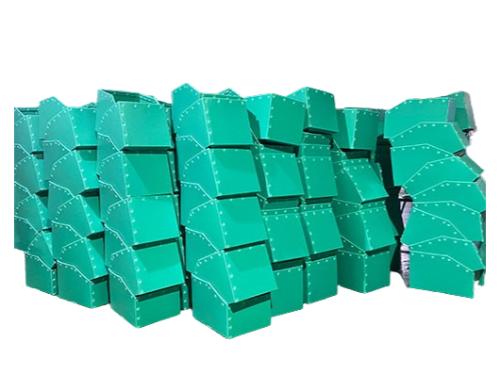
In modern warehouses, distribution centers, manufacturing facilities, and retail operations, efficient material handling is essential for maintaining productivity and controlling operating costs. Businesses need practical storage solutions that help employees organize products, move components safely, and manage inventory with minimal effort. Choosing the right containers can make a significant difference in daily workflows, particularly in environments where items are frequently picked, sorted, transported, and replenished.
Corrugated plastic picking bins offer a lightweight, durable, and reusable solution for these requirements. Manufactured from corrugated polypropylene (PP) sheets, these bins combine a structured hollow-core design with a smooth surface and customizable dimensions. They are suitable for handling a wide range of small parts, packaged products, accessories, and warehouse supplies. Compared with conventional cardboard containers, they can provide better moisture resistance, longer service life, and greater flexibility for repeated handling.

One of the main advantages of corrugated plastic picking bins is their lightweight construction. The hollow fluted structure of corrugated polypropylene reduces material weight while maintaining useful rigidity. This makes the bins easier for employees to lift, carry, reposition, and organize throughout the working day.
In warehouses where workers handle hundreds of orders or components daily, reducing the weight of empty containers can simplify routine operations. Lightweight bins are also convenient for picking carts, shelving systems, packing stations, and assembly workstations. Employees can move containers between different areas without dealing with unnecessarily heavy storage equipment.
For businesses that operate multiple picking zones, this feature can support more flexible workstation arrangements. Empty bins can be transported in batches, while filled bins can be integrated into existing material handling procedures according to their dimensions and load requirements.
Durability is another important benefit. Unlike ordinary paperboard containers, corrugated plastic bins are manufactured from polypropylene sheets that resist tearing and maintain their structure during regular handling. Their fluted internal construction provides stiffness, helping the containers withstand the demands of everyday warehouse activities.
Picking bins may experience frequent contact with shelving, carts, workbenches, and other containers. They may also be moved between storage areas, production lines, and packing stations several times a day. A properly designed plastic bin can withstand these routine movements better than many disposable alternatives.
Actual service life depends on sheet thickness, overall dimensions, load distribution, manufacturing quality, and handling conditions. Businesses should therefore evaluate the intended application before choosing a specification.
For operations with repetitive picking tasks, reusable bins can help reduce the frequency of container replacement and maintain a more consistent storage system.
Warehouses and production facilities do not always provide completely dry or dust-free environments. Containers may encounter condensation, occasional splashes, oily surfaces, or residues from handled products. Corrugated polypropylene offers good moisture resistance, making it suitable for applications where conventional cardboard may soften, deform, or lose strength when exposed to water.
The plastic surface also makes routine cleaning relatively straightforward. Depending on the application and cleaning method, employees can wipe the bins with a suitable cloth or use compatible cleaning solutions to remove dust and ordinary surface dirt.
This characteristic is useful in automotive parts distribution, electronics assembly, light manufacturing, and retail inventory management. Keeping storage containers clean can improve workplace organization and reduce the transfer of dirt between handling areas.
However, cleaning agents, temperatures, and exposure conditions should be checked for compatibility with the selected material. These bins should not automatically be considered suitable for food-contact, sterile, or other regulated environments without the necessary product specifications and certifications.
Different industries handle different products, so a standard container size may not always provide the best fit. Customization allows businesses to select dimensions and configurations that correspond to their inventory, shelving systems, picking methods, and available workspace.
Manufacturers can produce bins in different lengths, widths, heights, thicknesses, and colors. Depending on the design, additional options may include internal dividers, reinforced edges, handles, identification labels, and specially shaped compartments.
For example, an automotive components distributor may need separate compartments for fasteners, clips, connectors, and small replacement parts. An electronics manufacturer may prefer divided containers for organizing individual components during assembly. A retail warehouse may require different bin sizes for accessories, packaged goods, and frequently ordered items.
Color coding can also help employees distinguish product categories, workstations, or inventory statuses. Labels and identification areas make it easier to locate the correct items and return them to their designated positions.
When ordering customized bins, buyers should confirm the required load capacity, wall structure, assembly method, and compatibility with existing storage equipment.
An organized picking system helps employees locate products quickly and reduces avoidable handling errors. These bins provide designated spaces for individual products, components, or stock-keeping units (SKUs), making inventory easier to arrange and maintain.
When combined with suitable shelving and clear labels, they can support organized picking routes and systematic replenishment procedures. Employees can identify the correct container, retrieve the required quantity, and return unused items without repeatedly searching through mixed inventory.
Smaller bins are particularly useful for screws, electronic components, automotive accessories, hardware, and other products that are difficult to organize in large containers. Divided configurations can keep similar-looking parts separate and reduce the risk of mixing different specifications.
Businesses can also assign containers to specific orders, production batches, or assembly stations. This approach supports more consistent material flow between storage, picking, and production activities.

Purchasing decisions should consider more than the initial price. Disposable packaging may appear economical, but frequent replacement can increase purchasing, handling, and waste management costs over time.
Corrugated polypropylene bins can be reused across multiple picking cycles when properly maintained. Their reusable construction may reduce the need to purchase replacement containers as frequently as with disposable cardboard alternatives.
For businesses managing large inventories, this can support more predictable storage supply requirements. Standardized bin dimensions also make it easier to establish consistent storage layouts and reuse containers across different departments.
A practical cost comparison should consider the purchase price, expected service life, cleaning requirements, repair or replacement frequency, and end-of-life disposal arrangements. The financial benefits depend on actual operating conditions rather than material choice alone.
Because polypropylene is recyclable in appropriate waste streams, businesses may also be able to incorporate these bins into an established plastic recycling program, subject to local facilities and material acceptance requirements.
Warehouse space is expensive, so efficient use of shelves, carts, and workstations is important. Properly dimensioned picking bins help create a consistent storage layout, allowing businesses to allocate space according to product categories and picking frequency.
Their relatively low empty weight makes them convenient to relocate when warehouse layouts change. Depending on the design, bins may be nestable when empty or arranged in a compact configuration for storage and return transportation. Buyers should confirm these features with the manufacturer, since not every model supports nesting or stacking.
For facilities with limited picking space, selecting containers that fit existing shelving can improve accessibility and reduce wasted gaps. A standardized range of sizes can also simplify container management across multiple departments.
Choosing the right picking containers can improve inventory organization, simplify material handling, and support consistent warehouse workflows. Lightweight construction, durability, moisture resistance, customization flexibility, and reusability make corrugated plastic picking bins a practical option for many industrial and commercial operations.
Before purchasing, businesses should assess container dimensions, sheet thickness, load requirements, cleaning conditions, and compatibility with existing shelving or picking carts. Color coding, dividers, labels, and customized structures may provide additional benefits when matched to specific workflows.
For warehouse operators, manufacturers, distributors, and B2B buyers, selecting containers according to real operating requirements can help create a more organized, adaptable, and cost-conscious material handling system.