
- Sophia@polyflute.com
- +86 15162372874
- Mon - Sat 8:00-20:00
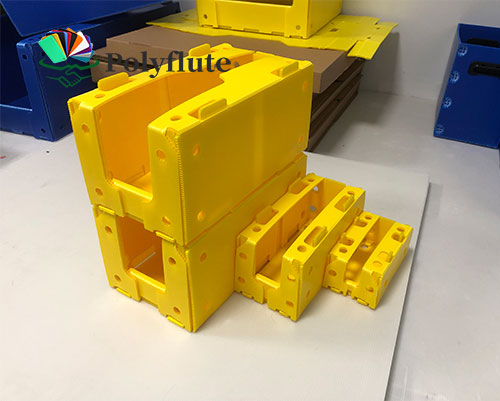
A plastic cardboard box is a practical packaging and storage solution that combines the lightweight structure of corrugated sheet materials with the durability and moisture resistance of plastic. Unlike conventional paper cardboard boxes, plastic cardboard boxes are commonly manufactured from corrugated polypropylene or similar thermoplastic materials. This construction makes them suitable for applications where packaging needs to withstand repeated handling, moisture, dirt, or changing storage conditions.
From logistics and automotive parts to agriculture, retail, manufacturing, and warehouse organization, plastic cardboard boxes can be adapted to many different requirements. Their ability to be cut, folded, printed, and customized also allows manufacturers to create boxes in different sizes and configurations.
One of the most common uses of a plastic cardboard box is reusable transportation packaging. Traditional paper cartons are often designed for limited-use shipping, while plastic corrugated boxes can be used repeatedly when their structure remains in suitable condition.
Businesses can use these boxes to move products between factories, warehouses, distribution centers, and customers. After the contents are removed, the empty boxes can be returned and used for another shipment.
This reusable characteristic can be particularly useful for companies with regular delivery routes or internal logistics systems. The box can become part of a returnable packaging cycle rather than being discarded after a single shipment.
The automotive industry handles a large number of components with different shapes, sizes, and surface requirements. A plastic cardboard box can be used to package automotive parts during transportation and storage.
Components such as trim parts, brackets, molded pieces, interior components, fittings, and other parts can be placed inside customized boxes. Internal dividers or partitions can be added to prevent products from moving excessively during transportation.
For sensitive components, the box can also be combined with protective inserts, foam, separators, or custom-fabricated compartments. This creates a packaging structure designed around the dimensions and handling requirements of the specific part.
Plastic cardboard boxes are also useful for organizing products inside warehouses. They can hold small and medium-sized items while keeping inventory separated by product type, model, size, or stock-keeping unit.
Compared with loose products placed directly on shelves, boxes provide a defined storage area. Labels can be attached or printed onto the exterior so workers can identify contents without opening every container.
Different box sizes can be used throughout a warehouse to accommodate different products. When the boxes are designed with folding features, empty containers may also be collapsed to save space when they are not being used.
Electronic components often need organized packaging to prevent scratching, contamination, or unnecessary movement. Plastic cardboard boxes can be customized with internal dividers to separate individual components.
They can be used for connectors, housings, cables, small assemblies, switches, and other products. A suitable internal structure can keep multiple pieces separated while allowing workers to remove and return products efficiently.
For applications involving sensitive electronic products, packaging requirements may include additional protection against static electricity, impact, dust, or other environmental factors. The material and internal design should therefore be selected according to the specific component requirements.
Moisture can be a concern when packaging is used in agricultural environments. Plastic corrugated materials offer better moisture resistance than conventional paperboard, making plastic cardboard boxes suitable for certain agricultural packaging applications.
They can be used for transporting vegetables, fruits, seedlings, agricultural supplies, and other products where exposure to damp conditions is possible.
The box design can include ventilation openings when airflow is required. Different dimensions can also be produced to accommodate specific products or transportation systems.
For food-contact applications, however, buyers should verify that the selected material and manufacturing process meet the applicable requirements before use.
Retail businesses can use plastic cardboard boxes for both transportation and storage. Products can be delivered to stores in the same containers that are later used for backroom organization.
This can reduce the need to transfer products between different packaging systems. Boxes can also be printed with product information, handling instructions, identification codes, or company graphics.
For retail displays, corrugated plastic boxes can sometimes be fabricated into custom structures rather than being used only as conventional closed containers. This provides additional flexibility for temporary promotional activities and product presentation.
Industrial components can be heavy, irregularly shaped, or sensitive to surface damage. A standard paper box may not always be suitable for repeated handling or exposure to moisture.
A plastic cardboard box can provide a lightweight outer structure that can be combined with customized internal supports. Depending on the application, dividers, pads, edge protection, and other inserts can be incorporated into the design.
This makes the packaging suitable for machinery components, tools, hardware, fabricated parts, and other industrial products that require organized transportation.
The actual load capacity depends on the material thickness, box dimensions, construction, folding design, and reinforcement, so specifications should be confirmed before packaging heavy products.
Returnable logistics is another important application. In a closed-loop supply chain, packaging moves repeatedly between suppliers and customers.
Plastic cardboard boxes can be designed for this type of circulation because they can be folded, handled, cleaned, and reused when properly specified. Their durability can help reduce the need for continuously purchasing disposable cartons.
When empty, some designs can be folded flat. This can reduce the volume required for returning empty packaging and make reverse logistics more efficient.
The number of reuse cycles will depend on loading conditions, handling practices, storage environment, and the construction of the box.
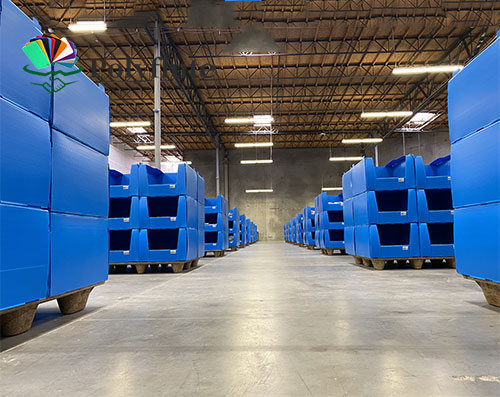
Factories often need to move components between different production stages. A plastic cardboard box can act as an internal material-handling container.
For example, components can be collected from one production line, transferred to another workstation, and then moved to final assembly. Standardized box dimensions can help create a consistent internal logistics system.
Labels and color coding can also be used to identify different production stages or component categories. This can make material flow easier to manage and reduce confusion between similar parts.
Plastic cardboard boxes can also be used to transport and store exhibition materials. Displays, printed panels, promotional products, samples, brochures, and event accessories often need to be moved between venues.
Because corrugated plastic is lightweight, boxes made from it can be easier to handle than some heavier packaging alternatives. Custom dimensions can also be produced for irregular exhibition materials.
After an event, the same boxes can be stored and reused for the next exhibition, especially when the packaging is designed as part of a long-term event logistics system.
A plastic cardboard box can serve far more purposes than simple product shipping. Its lightweight construction, moisture resistance, reusability, and customization options make it suitable for transportation, warehouse storage, automotive parts, industrial components, agricultural products, electronics, retail goods, exhibitions, and internal factory logistics.
Its greatest practical advantage is flexibility. Businesses can select different dimensions, thicknesses, folding structures, partitions, and printing options to create packaging that fits their specific products and workflows.
By considering product size, load requirements, environmental conditions, handling frequency, and expected service life, buyers can select a plastic cardboard box that provides an effective combination of protection, organization, and reusable packaging performance.