
- Sophia@polyflute.com
- +86 15162372874
- Mon - Sat 8:00-20:00
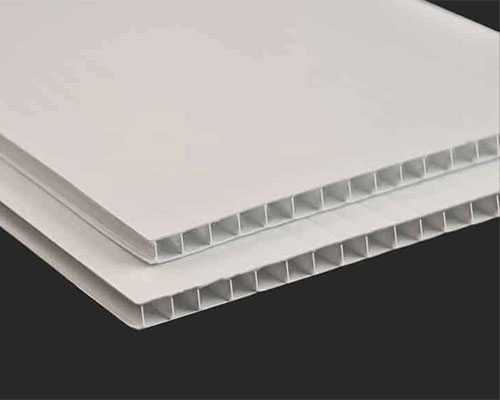
A 10mm corrugated plastic sheet is a versatile material for applications that require a useful balance of rigidity, low weight, durability, and processing flexibility. Made from corrugated polypropylene or similar thermoplastic materials, this sheet uses an internal fluted structure to provide stiffness without the mass of a solid plastic panel. The 10mm thickness gives it more structural depth than thinner corrugated sheets, making it suitable for applications where additional support and stability are important.
From packaging and protective panels to signage, partitioning, fabrication, and industrial applications, the material can be adapted to different project requirements. Understanding its main advantages helps buyers determine whether a 10mm sheet is appropriate for their intended use.

One of the main advantages of a 10mm corrugated plastic sheet is its strength-to-weight balance. The internal flutes create a cellular structure that increases the sheet’s resistance to bending compared with a thin flat plastic film or sheet.
At the same time, the material does not have the solid mass of a 10mm-thick plastic panel. This makes large sheets easier to carry, move, cut, and install. For projects involving large surface areas, reducing handling weight can simplify transportation and installation while still providing useful rigidity.
The actual stiffness depends on the polypropylene grade, flute design, wall thickness, sheet dimensions, and processing method, so buyers should evaluate the complete construction rather than thickness alone.
Large panels can become difficult to handle when they lack sufficient structural support. A 10mm corrugated plastic sheet provides greater depth than many thinner fluted sheets, which can help improve panel stability.
This can be valuable for temporary partitions, protective barriers, display panels, packaging separators, large signs, and other applications where the sheet needs to maintain its general shape.
When a panel is exposed to handling or moderate mechanical stress, the internal structure can distribute loads across the sheet. Proper support is still necessary for long spans or applications exposed to significant wind, impact, or concentrated loads.
Polypropylene is naturally resistant to water absorption, making corrugated plastic useful in environments where moisture is present. A 10mm corrugated plastic sheet can therefore be considered for applications where paperboard or other moisture-sensitive materials may not provide sufficient service performance.
The material can be used for outdoor displays, protective covers, reusable packaging components, warehouse applications, and other areas where occasional contact with water is expected.
Moisture resistance does not mean every finished product is suitable for permanent outdoor exposure. Printing systems, adhesives, fasteners, UV exposure, and the specific plastic formulation can affect long-term performance.
Another important advantage is processing flexibility. A 10mm corrugated plastic sheet can be cut, drilled, creased, scored, or otherwise fabricated with suitable equipment.
This allows manufacturers to produce custom dimensions and shapes rather than being restricted to standard rectangular panels. Depending on the application, sheets can be converted into partitions, protective components, display structures, packaging inserts, or other fabricated products.
For commercial production, digital cutting, CNC equipment, saws, or other appropriate tools may be selected according to the required accuracy and production volume. The best processing method depends on sheet construction and final design.
The relatively durable structure of corrugated polypropylene makes 10mm sheets useful when a material needs to be handled more than once. Unlike disposable paper-based materials, plastic sheets can potentially be reused for repeated storage, transportation, protection, or display applications.
For example, reusable separators can be placed between products during transportation, while protective panels can be moved between different work areas. In warehouses and manufacturing facilities, durable plastic components can also be returned to circulation after use.
Actual service life depends on loading, impact, folding, temperature, UV exposure, and other environmental conditions.

Plastic surfaces are generally straightforward to clean. This can be an advantage in warehouses, workshops, production areas, and other environments where dust, dirt, or occasional spills are possible.
A 10mm corrugated plastic sheet can often be wiped or washed using cleaning methods appropriate for the material and application. The closed outer surfaces also provide a practical barrier against moisture compared with porous sheet materials.
For applications involving chemicals, oils, solvents, or specialized cleaning agents, compatibility should be confirmed before use because resistance varies by substance, concentration, temperature, and exposure time.
Polypropylene is generally a non-conductive material, giving corrugated plastic sheets useful electrical insulation characteristics in suitable applications. This can make the material relevant for certain protective covers, separators, packaging components, and industrial fabrication projects.
However, a corrugated plastic sheet should not automatically be treated as a certified electrical insulation product. Where electrical safety is critical, buyers should select material according to the applicable technical standards and verify the required electrical properties with the manufacturer.
A 10mm corrugated plastic sheet can be used across a variety of indoor and outdoor environments, provided the material formulation and application are appropriate. Polypropylene offers useful resistance to many common environmental conditions and does not readily absorb moisture.
Temperature is still an important consideration. Extreme heat can affect dimensional stability, while very cold conditions may change impact performance. Continuous outdoor exposure can also affect unprotected polypropylene through ultraviolet degradation.
For demanding applications, UV stabilization, suitable additives, or protective treatments may be considered during material selection.
The combination of large available sheet sizes and relatively low weight makes 10mm corrugated plastic practical for applications that require substantial coverage.
Instead of assembling multiple small components, manufacturers can sometimes use larger sheets to create a continuous protective or display surface. Fewer joints can simplify fabrication and create a cleaner finished appearance.
This can be useful for temporary wall protection, partitions, packaging protection, exhibition structures, signage substrates, and other large-area projects.
A 10mm corrugated plastic sheet can be supplied in different colors, dimensions, surface options, and material formulations depending on the manufacturer and application.
Sign companies may use printable sheets for large-format graphics. Packaging manufacturers can fabricate separators and protective inserts. Industrial users can convert the material into covers, dividers, and protective panels. Construction and event businesses may use it for temporary partitions and display structures.
This broad processing range allows the same basic material concept to serve different industries without requiring a completely different substrate for every project.
Thickness should be treated as only one part of the specification. Buyers should also consider sheet dimensions, flute configuration, surface finish, color, polypropylene grade, weight, impact requirements, printing needs, and expected environment.
The intended use should be explained clearly when requesting a quotation. A sheet for indoor signage may have very different requirements from one used for outdoor protection or repeated industrial handling.
It is also useful to confirm tolerances, packaging, cutting options, minimum order quantities, and whether samples are available before placing a larger order.
The main advantages of a 10mm corrugated plastic sheet come from its structured construction. It can provide useful rigidity while remaining lighter than many solid panels, and it combines moisture resistance with convenient fabrication and relatively easy maintenance.
Its versatility makes it suitable for signage, packaging, protection, partitions, displays, warehouse organization, and industrial applications. However, the best performance depends on selecting the right sheet construction for the actual working conditions.
By evaluating stiffness, weight, moisture exposure, temperature, UV requirements, processing methods, and expected service life together, buyers can choose a 10mm corrugated plastic sheet that provides an effective balance of performance, handling convenience, and production flexibility.