
- Sophia@polyflute.com
- +86 15162372874
- Mon - Sat 8:00-20:00

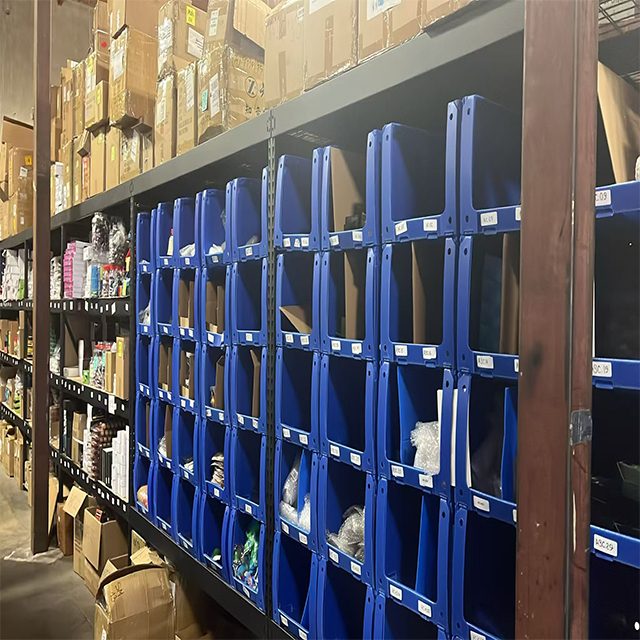
Efficient warehouse storage is not only about having enough space. It is also about keeping products organized, accessible, protected, and easy to identify. For warehouses that handle small parts, components, fasteners, tools, accessories, or frequently picked inventory, plastic warehouse bins provide a practical solution for improving storage efficiency and inventory organization.
Compared with loose cartons, open shelves, or improvised containers, plastic storage bins can create clearly defined locations for different products. They can also make picking faster, reduce misplaced inventory, and help warehouse employees maintain a cleaner and more systematic working environment.
Plastic warehouse bins are reusable storage containers designed for organizing products and materials in warehouses, workshops, distribution centers, factories, and other industrial environments. They are commonly made from durable plastic materials and are available in different sizes, shapes, and configurations.
Depending on the application, warehouse bins can be placed on shelving, workbenches, storage racks, cabinets, or specialized bin systems. Some models are designed with open fronts for quick picking, while others use enclosed structures for protecting stored items from dust and contamination.
The main advantage is simple: each type of inventory can have its own designated storage location.
This makes plastic warehouse bins particularly useful when a warehouse needs to manage a large number of small or medium-sized items.
One of the biggest challenges in warehouse management is knowing exactly where each item is located. When small components are stored together in large cartons or mixed containers, employees may spend unnecessary time searching for the required product.
Plastic warehouse bins divide inventory into clearly defined storage locations. A bin can be assigned to one SKU, product type, size, color, or component.
For example, a hardware warehouse may use separate bins for screws, nuts, washers, bolts, and fittings. This simple arrangement can make inventory identification much easier.
Warehouse picking efficiency has a direct impact on operating costs. Employees need to locate products quickly, retrieve the correct quantity, and move to the next order.
Open-front plastic bins are particularly useful for picking operations because their contents can be accessed without opening boxes or moving other products. When bins are clearly labeled and arranged according to picking frequency, workers can locate commonly ordered items more quickly.
For warehouses processing many small orders every day, this can significantly improve workflow.
Warehouse space is expensive, so storage systems should make good use of available vertical and horizontal areas.
Plastic bins can be arranged on shelves and racks to create multiple storage levels. Different bin sizes can also be selected according to the dimensions and quantities of stored products.
Instead of placing small components in oversized cartons, warehouses can use appropriately sized bins to reduce wasted space. Modular storage also makes it easier to reorganize shelves when inventory requirements change.
Unlike disposable cardboard boxes, reusable plastic bins are designed for repeated handling. Quality industrial bins can withstand frequent movement, picking, loading, and unloading.
Their durability makes them suitable for environments where containers are handled every day. A reusable storage system can also reduce the need to continually purchase disposable packaging materials.
For businesses focused on long-term warehouse organization, durability is an important consideration when selecting storage containers.
The versatility of plastic warehouse bins makes them suitable for many industries.
Factories often need to store screws, bearings, connectors, machine components, tools, and other small parts close to production lines. Plastic bins can keep these items separated and accessible.
Automotive warehouses may handle thousands of different components. Bins can be used for fasteners, electrical parts, clips, fittings, maintenance components, and other small products.
Electronic components are often small and available in many specifications. Dedicated bins help prevent different parts from being mixed together and make component identification easier.
Distributors of construction hardware, tools, fittings, and accessories can use bins to organize large product ranges while keeping frequently picked products within easy reach.
Maintenance departments often need immediate access to replacement parts and consumables. Bins installed near work areas can provide convenient storage for commonly used items.
Not every warehouse has the same storage requirements. Before purchasing bins, several factors should be considered.
The first consideration is the size of the products being stored. A bin that is too large may waste valuable shelf space, while a bin that is too small may not hold enough inventory.
Measure the typical products and select a bin size that provides sufficient capacity without unnecessary empty space.
The required load capacity depends on the weight and density of the stored products. Lightweight plastic components require different storage solutions from heavy metal parts.
For industrial applications, always check the manufacturer’s load specifications before selecting a bin.
Open-front bins are useful when quick access is important. Stackable bins may be suitable when vertical storage is a priority. Hanging or rack-compatible designs can be useful for specific warehouse shelving systems.
The best design depends on how frequently products are accessed and how the storage area is organized.
A well-organized bin system should make product identification easy. Label holders, barcode labels, SKU numbers, and color coding can all be used to improve inventory visibility.
Clear labeling becomes increasingly important as the number of SKUs increases.
Cardboard boxes remain useful for shipping and temporary storage, but they may not be ideal for long-term warehouse organization.
Plastic bins are generally more suitable for repeated handling and structured storage. They can be cleaned, reused, and relocated when warehouse layouts change.
For small parts that need frequent access, plastic bins also provide better visibility and accessibility than closed cartons.
This does not mean cardboard packaging should be eliminated. Instead, warehouses can use cardboard for transportation while using reusable plastic containers for internal storage and picking.
Simply purchasing bins is not enough to create an efficient storage system. Their arrangement should match the warehouse workflow.
Frequently picked products should generally be positioned in easily accessible locations. Heavy items should be stored at appropriate levels to reduce handling risks. Similar products can be grouped together, while different specifications should have clearly separated locations.
A consistent labeling system should also be established. For example, warehouse locations can combine aisle, shelf, and bin numbers so employees can quickly identify where products belong.
Regular inventory reviews are equally important. When products are discontinued or demand changes, unused bins and storage locations should be reorganized instead of allowing them to become cluttered.
Plastic warehouse bins are a practical solution for businesses looking to improve inventory organization, picking efficiency, and warehouse space utilization. By dividing products into clearly identified storage locations, they can make small parts easier to find, handle, count, and replenish.
The right solution depends on product dimensions, weight, storage layout, picking frequency, and labeling requirements. With suitable bin sizes and a well-planned organization system, warehouses can create a cleaner and more efficient working environment while making better use of available storage space.
For manufacturers, distributors, workshops, and fulfillment operations handling large numbers of small products, investing in a properly designed plastic bin storage system can be a simple but effective step toward better warehouse management.