
- Sophia@polyflute.com
- +86 15162372874
- Mon - Sat 8:00-20:00

Corrugated plastic wall panels are a practical material solution for businesses, warehouses, workshops, retail stores, exhibitions, construction projects, and temporary facilities. Combining a lightweight structure with good durability, moisture resistance, and easy fabrication, these panels provide an economical alternative to many traditional wall covering materials.
As businesses look for materials that are easy to transport, install, clean, and customize, corrugated plastic has become increasingly useful for both permanent and temporary applications. This guide explains what corrugated plastic wall panels are, their main benefits, common applications, installation considerations, and how to choose the right panels for different projects.

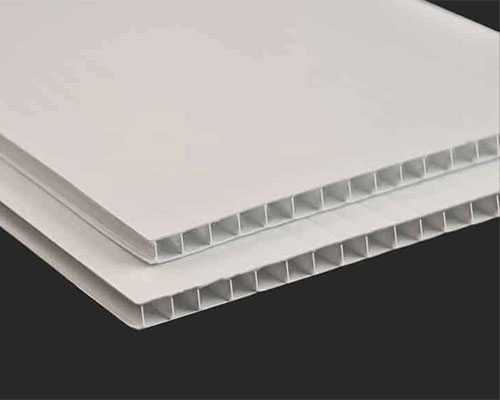
Corrugated plastic wall panels are sheets made primarily from polypropylene, commonly known as PP. Unlike solid plastic sheets, corrugated panels contain a series of internal flutes or hollow channels. These channels run through the sheet and create a structure that provides rigidity without making the panel excessively heavy.
The fluted construction is one of the most important characteristics of this material. It allows manufacturers to produce panels that are relatively lightweight while still providing useful strength for wall protection, partitions, displays, and other applications.
Corrugated plastic wall panels are available in different thicknesses, dimensions, colors, and surface finishes. Depending on the intended use, they can also be printed, cut, drilled, folded, or fabricated into customized shapes.
There are several reasons why corrugated plastic wall panels are popular in commercial and industrial environments.
One of the main advantages of corrugated plastic is its low weight. The hollow fluted structure uses less material than a comparable solid sheet while maintaining useful structural rigidity.
This makes the panels easier to carry and install. For large projects, lower weight can also simplify transportation and handling, reducing the physical effort required during installation.
Polypropylene is naturally resistant to water and moisture. Corrugated plastic wall panels therefore work well in environments where humidity or occasional water exposure may occur.
They can be used in workshops, storage areas, agricultural facilities, temporary construction spaces, and other locations where conventional paper-based or moisture-sensitive materials may not be suitable.
Corrugated plastic panels are designed to withstand normal handling and everyday use. Their fluted structure contributes to rigidity and helps the panels resist minor impacts.
This makes them useful as protective wall coverings in warehouses, factories, garages, and workshops. While they are not intended to replace heavy-duty structural walls, they can provide an additional protective surface against everyday wear.
Another major advantage is that corrugated plastic is relatively easy to process. Depending on the panel thickness, it can be cut with suitable hand tools or industrial equipment.
Panels can also be drilled, scored, folded, and customized according to project requirements. This flexibility allows manufacturers and installers to create panels for specific wall dimensions, partitions, displays, and protective structures.
Smooth plastic surfaces are generally easier to clean than many porous wall materials. Dust, dirt, and light stains can often be removed using a suitable cloth, water, or mild cleaning solution.
This characteristic makes corrugated plastic wall panels useful in environments where maintaining a clean appearance is important, such as retail spaces, workshops, storage areas, and temporary facilities.

The versatility of corrugated plastic allows these panels to serve many different purposes.
Warehouses and manufacturing facilities often need practical materials that can withstand regular activity. Corrugated plastic wall panels can be installed as protective coverings or used to separate working areas.
They can help create a cleaner visual environment while providing an additional barrier between walls and equipment, carts, boxes, and other items.
Corrugated plastic wall panels can also be used to create temporary partitions. Businesses may need to divide large rooms into smaller areas for storage, production, maintenance, or administrative purposes.
Because the panels are lightweight, they can be easier to move and reposition than heavier construction materials. This is especially useful when workspace layouts change frequently.
In retail stores, corrugated plastic panels can combine functionality with visual communication. Printed panels can display product information, promotional messages, company logos, or directional graphics.
Businesses can select different colors and printed designs to create a consistent visual identity while using the same basic material for wall decoration or displays.
Exhibitors frequently need display materials that are lightweight and easy to transport. Corrugated plastic wall panels can be used for booth backdrops, partitions, promotional walls, information boards, and decorative elements.
Custom printing makes it possible to add logos, product images, text, and other graphics directly to the panel surface.
Workshops and garages can benefit from wall coverings that are easy to clean and maintain. Corrugated plastic can be used behind workbenches, around storage areas, or in selected sections where additional surface protection is required.
Its lightweight construction also makes installation relatively straightforward for smaller projects.
When selecting a wall panel, businesses often compare corrugated plastic with plywood, cardboard, metal, or solid plastic sheets.
Compared with cardboard, polypropylene corrugated panels provide significantly better moisture resistance and are more suitable for repeated use. Compared with solid plastic sheets, the fluted construction can reduce weight and material consumption.
Metal panels may provide greater strength for demanding structural applications, but they can also be heavier and more difficult to cut or modify. Corrugated plastic is often more suitable when low weight, easy fabrication, and economical installation are priorities.
The best material ultimately depends on the specific environment, required service life, impact requirements, installation method, and budget.
Before purchasing panels, buyers should evaluate several specifications.
Panel thickness is important because thicker panels generally provide greater rigidity. The appropriate thickness depends on whether the panels are being used for wall covering, partitions, displays, or protection.
Panel dimensions should also match the installation area. Standard sizes can reduce cutting and installation work, while custom sizes may minimize material waste for specialized projects.
Color and surface finish are important for commercial and visual applications. White panels are widely used for clean, neutral designs, while colored or printed panels can support branding and decoration.
Printing requirements should be considered when the panels will be used for advertising, exhibitions, retail displays, or signage. Buyers should confirm the required printing method, resolution, durability, and artwork specifications with the manufacturer.
Proper installation can improve both appearance and service life. Before installation, measure the wall carefully and prepare a suitable mounting surface.
Depending on the application, corrugated plastic wall panels may be attached using screws, clips, adhesives, brackets, or other appropriate fastening methods. Fasteners should be selected according to the panel thickness and the characteristics of the supporting wall.
When cutting panels, use appropriate tools and maintain accurate measurements. For larger installations, leaving suitable allowances for expansion and movement may also be necessary depending on the environment.
Corrugated plastic wall panels offer a versatile combination of lightweight construction, moisture resistance, durability, easy fabrication, and customization. They can be used for warehouse protection, temporary partitions, retail displays, exhibition booths, workshops, garages, and many other commercial applications.
For buyers, choosing the right panel requires careful consideration of thickness, size, color, printing, installation method, and intended environment. When these factors are matched correctly, corrugated plastic wall panels can provide a practical and cost-effective solution for both temporary and long-term projects.