
- Sophia@polyflute.com
- +86 15162372874
- Mon - Sat 8:00-20:00
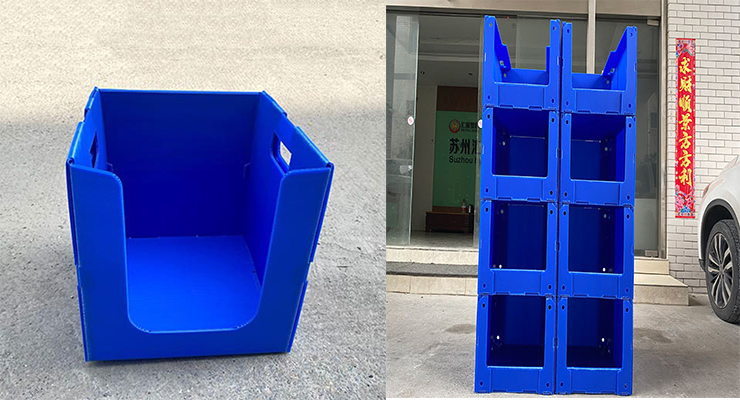
Efficient storage is essential for clothing warehouses, distribution centers, garment manufacturers, apparel retailers, and e-commerce fulfillment facilities. Thousands of garments may move through a warehouse every day, and poor organization can quickly lead to misplaced products, damaged clothing, slow picking, and unnecessary labor costs. Clothing warehouse bins provide a practical way to organize apparel, accessories, components, and other inventory while making storage and picking operations more efficient.
From folded shirts and trousers to accessories, packaging materials, and seasonal merchandise, the right storage bins can help businesses create a cleaner and more systematic warehouse. This article explains what clothing warehouse bins are, their major benefits, common applications, and how to select the right solution for different clothing storage requirements.
Clothing warehouse bins are reusable storage containers designed to organize garments and related inventory in warehouses and distribution facilities. They can be manufactured from materials such as polypropylene or corrugated plastic, depending on the required strength, durability, and application.
Unlike ordinary cardboard boxes, reusable plastic bins are designed for repeated handling and can withstand the demands of busy warehouse environments. They can be placed on shelving, racks, carts, workstations, or other storage systems.
Many bins are available in different sizes, shapes, colors, and configurations. Some feature open fronts for quick access, while others have solid walls or lids for protecting inventory from dust and contamination. Labels, barcodes, and identification cards can also be added to make individual products easier to locate.
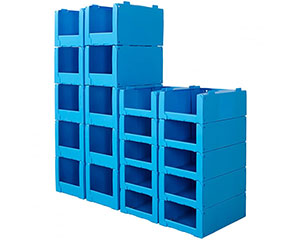
One of the biggest advantages of clothing warehouse bins is improved inventory organization. Apparel warehouses often store products according to style, size, color, season, material, or SKU. Without a clear storage system, employees can waste significant time searching for individual products.
Bins create designated storage locations for specific inventory categories. A warehouse can assign one bin to a particular SKU or use multiple bins to separate sizes and colors. This simple approach makes inventory easier to identify and reduces unnecessary movement.
Another important benefit is improved picking efficiency. In e-commerce and apparel distribution, workers may need to pick hundreds of individual items every day. Open-front bins allow employees to see and access products quickly without opening cartons or moving other boxes.
Reusable bins can also reduce dependence on disposable packaging. Durable plastic storage containers can be used repeatedly, helping businesses reduce the amount of cardboard and other single-use packaging generated during internal warehouse operations.
Clothing warehouse bins can be used for many different types of apparel inventory. For example, folded shirts, sweaters, jeans, trousers, underwear, uniforms, and children’s clothing can be separated into individual containers.
They are also useful for smaller apparel-related products. Socks, belts, scarves, gloves, ties, buttons, zippers, labels, and other accessories can easily become mixed together when stored without proper organization. Small bins provide dedicated compartments for these items.
Garment manufacturers can use bins to store production components before assembly. For example, sewing accessories, fabric samples, fasteners, and finished components can be separated according to production orders.
E-commerce fulfillment centers can also benefit from organized bin systems. Products can be assigned to specific locations based on SKU numbers, making it easier for workers to identify and pick orders accurately.
Seasonal inventory is another important application. Winter clothing, summer garments, promotional products, and special collections can be separated into clearly labeled storage locations. When the appropriate season arrives, workers can quickly identify the required inventory.

When choosing clothing warehouse bins, businesses should consider several factors rather than selecting containers based only on price.
Size and capacity are important because different garments require different storage volumes. Small bins may be ideal for accessories, while larger containers are more suitable for folded clothing.
Material durability should also be considered. Polypropylene and corrugated plastic are popular choices because they are lightweight, reusable, and resistant to moisture. The material should match the expected frequency of handling and warehouse conditions.
Accessibility is another key factor. Open-front bins can be particularly useful for picking operations because workers can access products without removing the entire container from the shelf.
Stackability can help businesses maximize vertical storage space. Stackable bins allow warehouses to use available floor and shelf space more efficiently when the containers are designed to remain stable when stacked.
Labeling options are essential for inventory management. Bins can accommodate labels, barcodes, SKU information, or color coding, helping employees identify products quickly and accurately.
A good bin storage system should follow a logical organization strategy. Start by grouping products according to major categories such as product type, brand, collection, or department. Then divide each category according to size, color, style, or SKU.
High-demand products should generally be placed in easily accessible locations. Frequently picked items can be positioned at comfortable working heights, while slow-moving or seasonal products can be stored in less accessible areas.
Clear labeling is equally important. Each bin should have an easy-to-read identification system that corresponds with the warehouse inventory management system. Barcodes can further improve picking and stock-checking accuracy.
Regular inventory checks should also be performed. Even the best storage system can become inefficient if products are returned to incorrect locations or labels become damaged.
Cardboard boxes may be inexpensive and convenient for transportation, but they are not always the best choice for long-term warehouse storage. They can become damaged by moisture, repeated handling, compression, or frequent opening and closing.
Reusable plastic bins are generally more suitable for long-term internal storage. They provide consistent dimensions, can be cleaned when necessary, and are designed for repeated use.
For warehouses with high inventory turnover, the durability and organization benefits of reusable bins can make them a practical investment. Cardboard boxes can still be useful for shipping, while reusable bins handle internal storage and picking.
The best clothing warehouse bins depend on the type of inventory, available warehouse space, picking frequency, and storage system. Businesses should evaluate the dimensions of their garments, expected load capacity, shelf compatibility, labeling requirements, and handling methods before purchasing.
For operations that handle large quantities of apparel, a standardized bin system can simplify inventory management and improve workflow consistency. Different bin sizes can be combined to accommodate products of various dimensions while maintaining an organized appearance.
Ultimately, well-designed clothing warehouse bins can help businesses improve storage efficiency, accelerate order picking, protect inventory, and create a more organized working environment. By selecting durable containers and implementing a logical labeling and placement system, clothing warehouses can make better use of available space while supporting faster and more accurate daily operations.