
- Sophia@polyflute.com
- +86 15162372874
- Mon - Sat 8:00-20:00

Efficient storage is essential for every warehouse, whether it handles small components, spare parts, packaging materials, tools, or finished products. When inventory is poorly organized, workers spend more time searching for items, picking errors become more common, and valuable floor space can be wasted. A plastic bin warehouse storage system provides a simple and flexible way to improve organization while keeping frequently handled products easy to identify and access.
Plastic storage bins are widely used because they are lightweight, durable, reusable, and available in many sizes and configurations. By selecting the right bins and arranging them according to warehouse requirements, businesses can create a cleaner, safer, and more productive working environment.
A plastic bin warehouse storage system uses reusable plastic containers to organize inventory and materials. These bins can be placed on shelving units, racks, workstations, cabinets, carts, or other storage structures. They are particularly useful for products that are too small for pallets but need more organization than open shelving can provide.
Common applications include storing nuts, bolts, screws, electrical components, automotive parts, tools, hardware, fittings, packaging accessories, and maintenance supplies. Some bins are designed with open fronts, allowing workers to remove products without taking the container from the shelf.
The main purpose is to give every item a designated storage location. This makes inventory easier to find and can reduce unnecessary movement throughout the warehouse.
One of the biggest advantages of plastic bins is their durability. Compared with many disposable storage solutions, reusable plastic containers can withstand repeated handling and regular warehouse operations. Quality plastic bins can also resist moisture and are easy to clean, making them suitable for demanding environments.
Another benefit is their lightweight construction. Workers can move smaller bins easily when inventory needs to be relocated or reorganized. This flexibility is valuable when warehouse layouts change because of seasonal demand, new product lines, or changes in production.
Plastic bins also support better visual organization. Different sizes or colors can be assigned to different product categories, while labels can identify part numbers, quantities, or storage locations. As a result, workers can quickly recognize where materials belong.
Selecting the correct size is an important part of designing a plastic bin warehouse system. A bin that is too small may require frequent replenishment, while a bin that is too large can waste storage space and encourage poor organization.
Start by evaluating the dimensions and quantity of the products being stored. Small hardware items may require compact bins, while larger components need deeper and wider containers. The weight of the contents should also be considered because a bin must have sufficient strength for its intended load.
It is often useful to use several bin sizes rather than relying on one standard dimension. Small bins can handle fast-moving components, medium bins can store common parts, and larger containers can accommodate bulky items.
Open-front plastic bins are especially useful in warehouses where employees frequently pick individual items. The open design allows workers to see the contents immediately and access products from the front.
This arrangement can improve picking efficiency because employees do not need to remove lids or open boxes repeatedly. Labels can be positioned directly above or on the front of each bin, creating a clear visual identification system.
For assembly lines, maintenance areas, and order-picking stations, open-front bins can keep frequently used components within easy reach. They can also help reduce clutter around workstations by giving every small item a defined location.
A well-organized storage system should follow a logical structure. One approach is to group products according to category, size, application, or frequency of use. Frequently picked products should generally be positioned in locations that workers can reach quickly.
Clear labeling is equally important. Labels can include product names, stock codes, dimensions, or barcode information. When bins are combined with a warehouse inventory management system, employees can locate products more efficiently and maintain more accurate stock records.
Another useful practice is to leave enough space between categories. Overcrowded shelves can make identification difficult and increase the possibility of picking the wrong item.
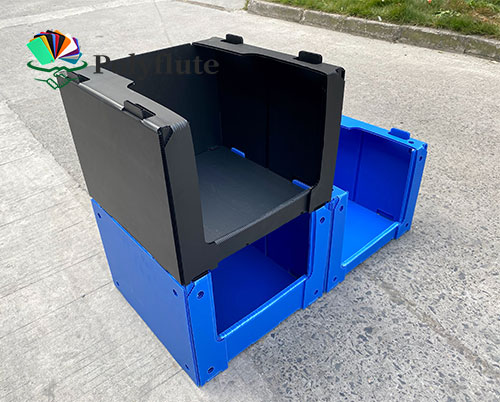
Warehouse storage does not have to rely entirely on floor space. Shelving and racking can be used to arrange bins vertically, increasing storage capacity without expanding the warehouse footprint.
Smaller bins are particularly suitable for multi-level shelving because they can organize many individual products within a relatively small area. However, heavy items should be stored at appropriate heights to reduce lifting risks and improve workplace safety.
When designing a vertical system, consider accessibility, shelf capacity, bin weight, and the frequency with which products are retrieved. The goal is to maximize available space without making everyday picking unnecessarily difficult.
A plastic bin warehouse solution can be adapted to different operational areas. In receiving zones, bins can temporarily hold small components while products are inspected and sorted. In picking areas, they can organize items according to orders or product categories.
Production facilities can use bins to supply components to assembly stations, while maintenance departments can store replacement parts and tools. Packaging areas can also use them for labels, tapes, fasteners, and other small supplies.
Because plastic bins are reusable, businesses can move them between departments when storage requirements change. This adaptability makes them suitable for both small warehouses and larger distribution facilities.
Warehouse containers are exposed to repeated handling, dust, impacts, and changing storage conditions. Therefore, material quality is an important consideration when selecting plastic bins.
High-quality bins should maintain their shape under normal use and provide sufficient strength for their intended application. Smooth surfaces also make cleaning easier, which can be important in environments where dust or debris accumulates.
Regular inspections can help identify damaged bins before they become a safety or operational problem. Broken containers should be removed from service, while labels should be replaced when they become difficult to read.
Although the initial investment in storage bins may be higher than using disposable cardboard boxes, reusable plastic containers can provide long-term value. They can be used repeatedly, reducing the need for constant replacement.
Their standardized dimensions can also improve shelf utilization. When bins fit properly on storage racks, businesses can make better use of available space and maintain a consistent warehouse layout.
For companies handling thousands of small components, this combination of durability, reusability, and organization can make plastic bins a practical investment.

A well-designed plastic bin warehouse storage system can improve organization, picking efficiency, space utilization, and inventory visibility. The key is not simply purchasing containers, but selecting the right bin sizes, creating logical storage categories, using clear labels, and arranging products according to their frequency of use.
Plastic bins are suitable for many warehouse environments because they are durable, lightweight, reusable, and easy to maintain. Whether used for small hardware, automotive components, manufacturing supplies, or maintenance parts, they provide a flexible foundation for organized storage.
As warehouse operations become more focused on efficiency and accurate inventory management, practical storage solutions remain increasingly important. With the right plastic bin system, businesses can turn scattered small-item inventory into a structured, accessible, and easier-to-manage storage operation.