
- Sophia@polyflute.com
- +86 15162372874
- Mon - Sat 8:00-20:00
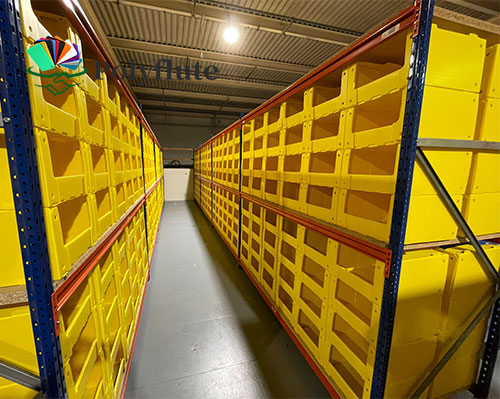
In modern warehouses, manufacturing facilities, workshops, and distribution centers, efficient storage management plays a critical role in improving productivity and reducing operational costs. As businesses handle increasing numbers of components, spare parts, fasteners, electronic accessories, and small items, traditional storage methods often fail to provide the flexibility and accessibility required for fast-moving operations. This is why picking trays have become an essential storage solution for many industries.
Picking trays are designed to organize, classify, and store small parts while allowing workers to quickly identify and retrieve items during picking processes. Among various material options available on the market, PP (polypropylene) picking trays have gained popularity due to their excellent durability, chemical resistance, lightweight structure, and cost-effectiveness.
Compared with metal, cardboard, or other plastic storage containers, PP picking trays offer a balanced combination of strength, flexibility, and long service life. For warehouses that require frequent handling and efficient inventory management, choosing PP material can significantly improve storage performance.
This article explains why polypropylene is an ideal material for picking trays and how PP picking trays help businesses create more organized, efficient, and reliable storage systems.
Picking trays are small storage containers specifically designed for organizing and managing individual components, tools, and products in workplaces where frequent item access is required. Unlike traditional storage boxes that are often used for bulk storage, picking trays focus on quick identification and convenient retrieval.
They are commonly used in:
Picking trays usually feature an open-front design, allowing employees to see and access stored items without removing the entire container from a shelf. This design improves workflow efficiency and reduces the time spent searching for products.
Available in different sizes, colors, and configurations, picking trays can be arranged on shelving systems, racks, cabinets, or workstations according to different storage requirements.
The material of a picking tray directly affects its durability, performance, and overall value. Polypropylene, commonly known as PP, is one of the most widely used engineering plastics because it offers several advantages that make it suitable for industrial storage applications.
PP is a thermoplastic polymer with excellent mechanical properties. It provides sufficient rigidity for maintaining shape while also offering flexibility to withstand daily impacts and repeated handling.
For picking trays that are constantly loaded, moved, stacked, and exposed to different working environments, PP provides a reliable solution.
One of the biggest advantages of PP picking trays is their outstanding durability.
Warehouses and factories often require storage containers that can withstand:
PP material has strong impact resistance compared with many traditional plastics. It can absorb shocks without easily cracking or breaking, which helps extend the service life of picking trays.
For businesses, this means fewer replacements and lower long-term storage costs.
Unlike cardboard storage boxes that may become damaged by moisture or repeated use, PP picking trays can be reused thousands of times while maintaining their structure and appearance.
Although durability is important, storage containers also need to be easy for workers to handle.
PP picking trays are lightweight compared with metal storage containers, making them easier to move, install, and reorganize. Employees can quickly pick up, carry, and rearrange trays without unnecessary physical effort.
The lightweight design provides several benefits:
For warehouses with high-frequency picking operations, lightweight storage solutions can improve overall operational efficiency.

Many industrial environments involve exposure to oils, cleaning agents, chemicals, and other substances. Choosing a storage material with good chemical resistance is essential for maintaining product quality and extending container lifespan.
PP material has excellent resistance to many common chemicals, including:
This makes PP picking trays suitable for industries such as automotive manufacturing, machinery repair, and chemical-related workplaces.
Even when exposed to challenging environments, PP trays can maintain their performance without significant degradation.
Storage areas are not always completely dry. Warehouses, workshops, and production environments may experience humidity, water exposure, or temperature changes.
PP picking trays provide excellent moisture resistance because polypropylene does not absorb water easily.
Compared with cardboard or wooden storage containers, PP trays offer better protection against:
This makes them especially suitable for long-term storage applications where reliability is important.
Keeping storage equipment clean is essential for professional warehouse management. Dust, oil, and small particles can accumulate on storage containers over time, especially in manufacturing environments.
PP picking trays are easy to clean because of their smooth plastic surface. They can be washed with water or cleaned with common industrial cleaning methods.
The advantages include:
For industries with strict cleanliness requirements, PP trays provide a practical storage option.
A major purpose of picking trays is improving organization.
In busy warehouses, workers often handle thousands of small components. Without proper organization, companies may experience:
PP picking trays help solve these problems by creating a structured storage system.
Different sizes and colors allow businesses to classify products based on:
With clear labeling systems, employees can quickly locate required items and improve picking accuracy.
When choosing picking trays, businesses often compare PP with other materials such as metal, cardboard, and ABS plastic.
Metal trays are strong but usually heavier and more expensive. They may also be vulnerable to rust in humid environments.
PP picking trays provide:
For most warehouse applications, PP offers sufficient strength without unnecessary weight.
Cardboard boxes are inexpensive but are not designed for long-term industrial use.
Compared with cardboard, PP trays offer:
Although cardboard may work for temporary storage, PP is more suitable for continuous operations.
Some plastics may become brittle under impact or temperature changes. PP provides a good balance between toughness, flexibility, and affordability.
This makes polypropylene one of the preferred choices for industrial storage products.
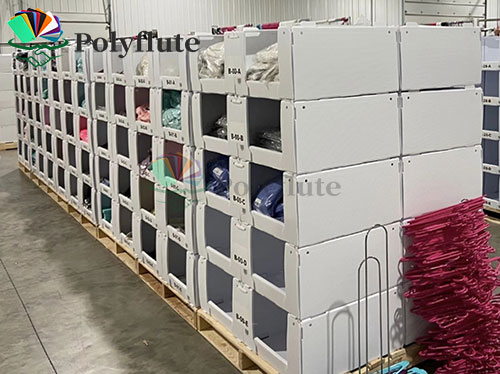
Due to their versatility, PP picking trays are widely used across different industries.
Automotive factories and repair workshops use PP picking trays to store:
Organized storage improves repair efficiency and production processes.
Electronic components require careful organization because many parts are small and similar in appearance.
PP picking trays help store:
Hardware businesses use picking trays for organizing:
Easy access helps workers complete tasks faster.
Distribution centers use PP picking trays to improve order fulfillment efficiency by keeping frequently picked products easily accessible.
Choosing the right storage solution improves warehouse efficiency and reduces operating costs. PP picking trays offer durability, lightweight handling, chemical resistance, moisture protection, and cost efficiency. Their reusable design makes them ideal for warehouses, factories, workshops, and assembly lines, providing long-lasting performance and better organization for small parts storage.