
- Sophia@polyflute.com
- +86 15162372874
- Mon - Sat 8:00-20:00
Efficient order fulfillment is one of the most important factors in warehouse productivity. Whether you operate an e-commerce fulfillment center, an automotive parts warehouse, a manufacturing facility, or a retail distribution center, selecting the right order picking bins can significantly improve picking accuracy, reduce labor costs, and maximize storage efficiency.
With thousands of SKUs, increasing customer expectations, and faster shipping requirements, warehouses can no longer rely on random storage methods. Instead, they need organized storage systems that support quick identification, easy access, and efficient inventory management. This is where order picking bins play a critical role.
In this guide, we’ll explore the different types of order picking bins, their applications, advantages, and how to choose the best option for your warehouse operations.
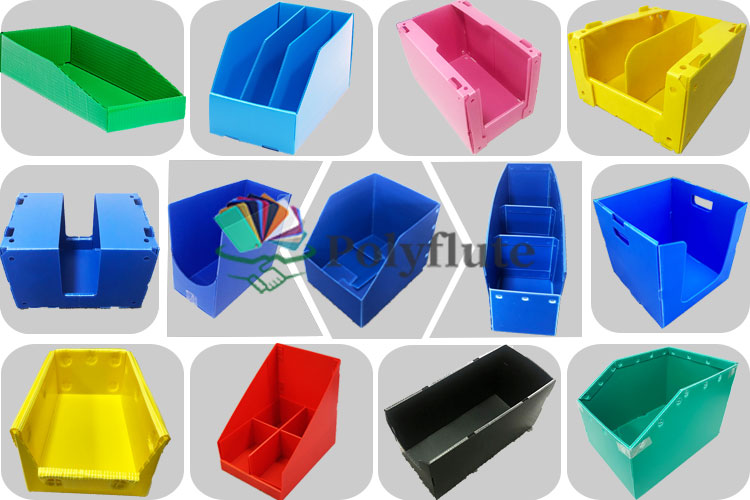
Order picking bins are storage containers specifically designed to organize products for manual or automated order fulfillment. They help warehouse workers quickly locate, retrieve, and replenish inventory while minimizing picking errors.
Unlike ordinary storage boxes, order picking bins are designed with accessibility in mind. Most feature open fronts, label holders, stackable designs, and compatibility with warehouse shelving or rack systems.
They are commonly used in:
Their primary goal is to make every picking operation faster and more accurate.
Modern warehouses process hundreds or even thousands of orders every day. Poor storage organization can lead to:
Proper order picking bins help solve these problems by providing organized product storage.
Major benefits include:
Workers spend less time searching for products when every SKU has its designated bin.
Clearly labeled bins reduce misplaced inventory and simplify stock replenishment.
Dedicated storage locations minimize picking mistakes and improve customer satisfaction.
Stackable and modular bins maximize vertical warehouse space.
Organized storage makes cycle counting and inventory audits more efficient.
Properly stored items reduce clutter in aisles and minimize workplace accidents.
Choosing the right type depends on your products, warehouse layout, and picking workflow.
Open front bins are among the most widely used order picking bins in warehouses.
Features
Advantages include:
These bins are designed to stack securely without collapsing.
Advantages include:
Many warehouses combine stackable bins with shelving systems for maximum storage density.
Shelf bins are long, narrow containers specifically designed for warehouse shelving.
Features include:
Shelf bins are especially useful when storing numerous SKUs in limited space.
Divider bins feature adjustable partitions that create multiple compartments within a single bin.
Advantages:
Ideal for:
These bins attach directly to louvered panels or rails.
Common applications include:
Benefits:
Electronic manufacturers frequently use conductive order picking bins to protect sensitive components.
Suitable for storing:
Advantages include:
Heavy-duty bins are designed for industrial environments.
Suitable for:
Features include:
Transparent bins allow workers to identify contents immediately without opening or removing labels.
Advantages:
These are especially popular in medical and pharmaceutical storage.

The material affects durability, cost, and application.
One of the most common materials.
Advantages:
HDPE bins offer greater impact resistance.
Benefits include:
ABS provides excellent rigidity and appearance.
Commonly used in:
Used for electrostatic-sensitive products.
Ideal for:
Selecting the right order picking bins involves more than choosing the correct size. Consider the following factors.
Choose bins that fit your inventory without wasting storage space.
Avoid:
Check the load capacity before purchasing.
Heavy products require:
Warehouses with thousands of SKUs typically benefit from:
Fast-moving products should be stored in:
Slow-moving inventory can occupy deeper storage areas.
Consider compatibility with:
Good labeling improves efficiency.
Look for bins with:
Different industries require different materials.
Examples:
Cold storage:
Chemical warehouses:
Electronics:
Food processing:
Many warehouses use color-coded bins to simplify inventory management.
Examples include:
Color coding reduces picking mistakes and speeds employee training.
Requirements:
Needs:
Important features:
Production facilities require:
Retail warehouses benefit from:

The right order picking bins are far more than simple storage containers—they are a key component of an efficient warehouse operation. By improving organization, increasing picking accuracy, optimizing storage space, and supporting faster order fulfillment, they contribute directly to lower operating costs and higher customer satisfaction.
When selecting order picking bins, evaluate factors such as product size and weight, SKU volume, picking frequency, warehouse layout, material durability, and future scalability. Whether you choose open-front bins, shelf bins, divider bins, heavy-duty containers, or anti-static solutions, investing in the right storage system will enhance warehouse performance and prepare your operation for continued growth.
Businesses that prioritize well-designed order picking systems today will be better equipped to meet tomorrow’s demands for faster, more accurate, and more efficient order fulfillment.