
- Sophia@polyflute.com
- +86 15162372874
- Mon - Sat 8:00-20:00
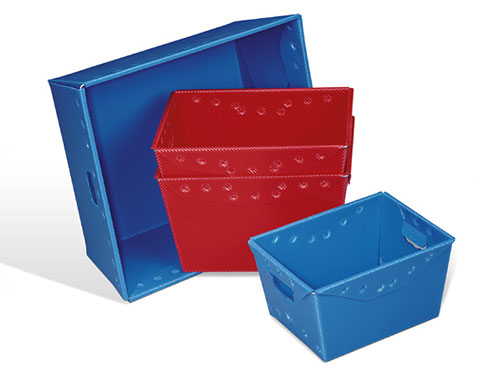
Corrugated plastic totes have become a core solution in modern industrial packaging, logistics, and material handling systems. Manufactured from polypropylene (PP) corrugated sheets, these containers offer a lightweight yet high-strength alternative to cardboard boxes, wooden crates, and even some metal bins.
Their popularity continues to grow across automotive, electronics, agriculture, e-commerce fulfillment, and manufacturing industries due to their durability, reusability, and cost efficiency in closed-loop logistics systems.
Unlike single-use packaging, corrugated plastic totes are engineered for repeated cycles, making them ideal for sustainable supply chain optimization and warehouse automation environments.

Corrugated plastic totes are reusable storage and transport containers made from twin-wall polypropylene sheets. The structure resembles corrugated cardboard but is significantly more durable, water-resistant, and chemical-resistant.
These structural characteristics make them suitable for both manual handling and automated conveyor systems.
Stackable totes are one of the most widely used configurations in industrial storage systems.
Stackable designs allow vertical storage without deformation, significantly improving warehouse density.
They integrate seamlessly with pallets, racks, and automated storage systems (AS/RS).
Stable stacking reduces the need for additional shelving or secondary packaging.
Strong compression resistance prevents deformation during multi-layer transport.
Foldable or collapsible totes are designed for return logistics and space-saving transport.
When collapsed, they can reduce volume by up to 80%, lowering reverse logistics costs.
Ideal for industries with repeated delivery-return cycles.
Minimal storage footprint when not in use.
Reduced transportation volume leads to lower fuel consumption and carbon emissions.
Attached lid totes (ALC totes) come with integrated lids that are permanently connected to the container body.
Prevents dust, contamination, and unauthorized access.
Lids cannot be misplaced, improving workflow efficiency.
Provides added protection for sensitive or expensive components.
Lid structure often reinforces stacking strength.

ESD corrugated totes are engineered for environments where static electricity control is critical.
Prevents damage caused by electrostatic discharge.
Meets requirements for semiconductor and PCB handling environments.
Unlike disposable ESD bags, these totes support repeated use.
Reduces risk of product failure during assembly and transport.
Heavy-duty totes are reinforced versions designed for high-load industrial applications.
Can carry heavier industrial parts without deformation.
Designed for long-term industrial reuse cycles.
Performs well under moisture, oil exposure, and temperature variations.
Lower total cost of ownership compared to disposable packaging.
Divider totes include internal partition systems for organizing multiple SKUs or fragile components within a single container.
Ideal for fragile or precision items.
Multiple product types can be stored in one tote.
Easier sorting and picking in warehouse operations.
Eliminates the need for multiple small containers.
Custom-printed totes integrate branding, labeling, and tracking information directly onto the container surface.
Supports digital logistics and inventory tracking systems.
Improves brand recognition in B2B distribution networks.
Permanent printing eliminates disposable label usage.
Color coding reduces picking and sorting errors.

Across all types, corrugated plastic totes provide several overarching benefits:
Although initial costs may be higher than cardboard, long-term reuse cycles significantly reduce total packaging expenditure.
Most corrugated plastic totes are manufactured using high-quality polypropylene sheets. Leading suppliers such as Huiyuan Plastic specialize in producing durable corrugated PP boards used in industrial packaging applications worldwide.
The production process typically includes:
When selecting a tote type, consider the following engineering and logistics parameters to ensure optimal performance, cost efficiency, and long-term usability across your supply chain.
For higher load scenarios, additional structural reinforcement such as double-wall fluting or internal ribbing may be required to maintain dimensional stability during stacking and transport vibration.
In dynamic logistics networks, foldable designs can significantly reduce reverse logistics costs, especially in high-frequency distribution cycles where empty container volume becomes a critical efficiency factor.
For precision industries, shock absorption and anti-static performance should be evaluated based on product fragility level and handling environment classification standards.
Tamper resistance and sealing compatibility should also be considered in regulated or traceable supply chains.
Advanced printing options such as UV-resistant inks, barcode integration, and RFID labeling can further enhance digital inventory management and warehouse automation compatibility.

Corrugated plastic totes have evolved into a foundational component of modern supply chain infrastructure. Their adaptability across multiple configurations—stackable, foldable, ESD-safe, heavy-duty, divider-based, and custom-printed—makes them suitable for nearly every industrial application.
As industries continue shifting toward automation, sustainability, and cost optimization, corrugated plastic totes will remain a critical asset in improving operational efficiency and reducing packaging waste across global logistics networks.
Top 5 Corrugated Plastic Sheets Manufacturer In China | 17 Years Of Export ExperienceDesign & Developed by VW Themes
WhatsApp us