
- Sophia@polyflute.com
- +86 15162372874
- Mon - Sat 8:00-20:00

The demand for lightweight, durable, and cost-efficient packaging and industrial materials has increased significantly across global supply chains. Among these materials, large corrugated plastic sheets have become a preferred solution for manufacturers, logistics providers, construction firms, and advertising industries due to their exceptional strength-to-weight ratio and recyclability.
In today’s competitive industrial landscape, businesses are constantly seeking alternatives to traditional cardboard, wood, and metal-based panels. As a result, large corrugated plastic sheets are widely adopted in applications where moisture resistance, chemical stability, and reusability are essential. Their structural design—typically a twin-wall or multi-wall fluted polypropylene (PP) or polyethylene (PE) configuration—provides superior rigidity while maintaining low weight.
This article explores material characteristics, production processes, industry applications, and procurement considerations for global buyers looking for wholesale sourcing solutions.
One of the main reasons industries switch to polymer-based fluted sheets is performance efficiency. large corrugated plastic sheets offer a unique combination of mechanical and environmental advantages that outperform traditional packaging substrates.
These benefits make large corrugated plastic sheets a strategic material choice for industries aiming to optimize cost, durability, and environmental compliance.
The production of fluted plastic sheets involves advanced extrusion technology designed to ensure consistent structure and performance.
High-quality polypropylene (PP) or polyethylene (PE) pellets are selected based on application requirements. Additives may include:
The polymer resin is melted and extruded through a flat die system, forming two parallel skins connected by vertical flutes. This creates the signature hollow-core structure found in large corrugated plastic sheets.
After extrusion:
Final sheets are cut into:
Manufacturers typically implement:
This controlled manufacturing environment ensures that large corrugated plastic sheets meet strict industrial performance standards.

Corrugated plastic sheets are not a single uniform product; they are engineered in multiple structural and functional variants to meet different industrial requirements. Understanding these categories helps buyers select the most suitable specification for packaging, construction, signage, and logistics applications. In most industrial markets, large corrugated plastic sheets are manufactured in several standardized and customized types based on flute structure, material composition, and surface treatment.
This is the most common structure, consisting of two flat surfaces connected by vertical flutes. It provides a balanced combination of strength and flexibility, making it suitable for packaging boxes, protective layers, and temporary signage. Single-wall sheets are lightweight and cost-efficient, widely used in general logistics and agricultural packaging.
Double-wall sheets feature an additional layered structure, significantly improving compression strength and impact resistance. This type is commonly used in heavy-duty industrial packaging, automotive part protection, and reusable storage containers. Many buyers choose this version when durability is a higher priority than cost.
Micro-flute sheets use finer internal flutes, resulting in a smoother surface and higher print quality. These are widely applied in advertising, retail displays, and high-end packaging where visual presentation is important.
Designed for electronics and precision components, this type prevents static electricity buildup that could damage sensitive devices. It is widely used in semiconductor packaging, PCB transport, and cleanroom environments.
These sheets are treated with UV stabilizers to resist sunlight degradation. They are ideal for outdoor signage, greenhouse applications, and long-term exterior use.
The versatility of corrugated plastic panels has enabled their adoption in multiple sectors. The following industries are among the largest consumers:
For international buyers, sourcing directly from manufacturers provides significant advantages in cost control and product customization.
Suppliers can offer:
Wholesale procurement of large corrugated plastic sheets allows:
When selecting a supplier, buyers should consider:
Understanding how corrugated plastic performs against traditional materials helps clarify its industrial value.
These comparative advantages explain why large corrugated plastic sheets are rapidly replacing older packaging and industrial panel solutions.
Modern supply chains increasingly prioritize eco-friendly materials. Corrugated plastic supports this transition through:
Industries adopting large corrugated plastic sheets contribute to circular economy initiatives while maintaining operational efficiency.
When choosing corrugated plastic products, several technical factors should be evaluated:
Proper selection ensures optimal performance of large corrugated plastic sheets across different industrial environments.
The global demand for corrugated plastic materials continues to expand due to evolving industrial requirements.
Key trends include:
With continued innovation in polymer engineering, large corrugated plastic sheets are expected to play an even more significant role in global industrial supply chains.
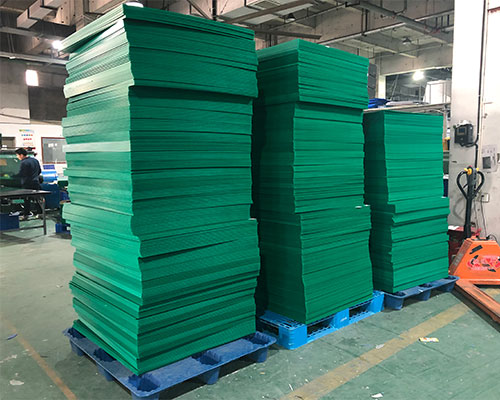
As industries move toward lightweight, durable, and sustainable material solutions, corrugated plastic technology has established itself as a leading alternative to traditional rigid substrates. From logistics to construction and advertising, its versatility continues to drive global adoption.
Businesses that invest in efficient material sourcing and structured procurement strategies can significantly enhance operational efficiency while reducing long-term costs. With strong performance characteristics and broad application potential, large corrugated plastic sheets remain a cornerstone material in modern industrial packaging and protection systems.