
- Sophia@polyflute.com
- +86 15162372874
- Mon - Sat 8:00-20:00
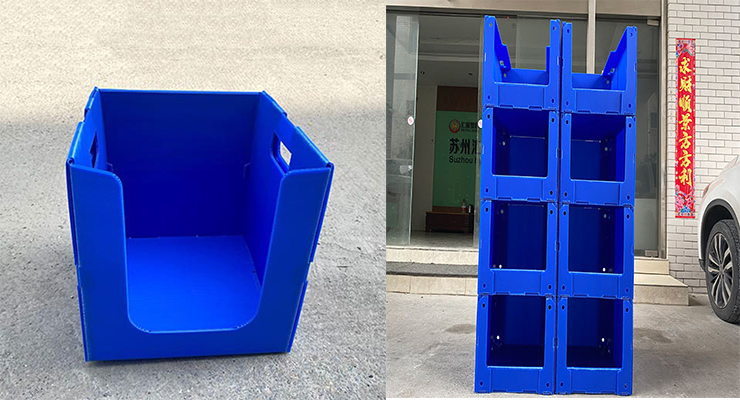
In modern logistics, warehousing, agriculture, and industrial storage systems, lightweight yet durable plastic-based solutions have become essential for efficient material handling. Among these solutions, coroplast bins stand out due to their balance of strength, flexibility, and cost efficiency. Made from corrugated polypropylene sheets, these containers are widely used across multiple sectors where reusable, moisture-resistant, and customizable storage is required.
The growing demand for sustainable and reusable packaging has further increased the adoption of coroplast bins in both commercial and industrial environments. Their structure allows for easy fabrication into different sizes, shapes, and load-bearing capacities, making them highly adaptable for diverse operational needs.
This article explores the main applications, structural advantages, and industry-specific uses of coroplast-based storage systems in detail.

Before understanding their applications, it is important to define the material and structure. Coroplast bins are storage containers manufactured from corrugated polypropylene sheets. The material consists of a twin-wall structure with fluted channels in between, offering a combination of rigidity and lightweight performance.
Key characteristics include:
Due to these properties, coroplast bins are widely adopted in environments requiring efficient material organization and transport protection.
One of the largest application areas for coroplast bins is warehousing and logistics operations. In distribution centers and storage facilities, efficient organization is critical for productivity.
These bins are commonly used to separate different product categories, components, or SKUs. Their modular design allows operators to create organized shelving systems for fast picking and restocking.
In e-commerce warehouses, coroplast bins are often integrated into picking systems. Workers can quickly identify and retrieve items, improving operational efficiency and reducing handling time.
For internal material movement, these bins reduce strain on workers due to their low weight while still providing sufficient structural support for packaged goods.
Agriculture is another major sector where coroplast bins play a significant role. Farmers and distributors rely on durable and washable containers for handling fresh produce and other agricultural goods.
During harvesting seasons, fruits and vegetables are collected in coroplast bins because they are lightweight and do not damage delicate produce surfaces.
The bins are used for temporary storage before sorting, packaging, or transportation. Their moisture resistance helps reduce spoilage caused by humidity exposure.
Because they are reusable and easy to clean, these bins are widely used for transporting agricultural goods to wholesale markets and distribution centers.
In manufacturing environments, organization and part protection are critical. Coroplast bins provide an efficient solution for storing semi-finished goods, tools, and components.
Small mechanical parts, electronic components, and assembly materials are often stored in segmented bin systems made from corrugated polypropylene.
These bins are integrated into assembly lines to ensure continuous material flow. Their lightweight design makes them easy to move between production stages.
Manufacturing facilities use coroplast bins to hold partially assembled products without risking contamination or damage.
Retail operations also benefit from the versatility of coroplast bins, especially in backroom organization and stock handling.
Retail stores use these bins to organize excess inventory in storage rooms, improving space utilization and product accessibility.
For seasonal goods, bins can be labeled and stacked, making it easier to manage fluctuating inventory levels throughout the year.
In some cases, coroplast bins are used to facilitate quick shelf replenishment, ensuring efficient product rotation on the sales floor.
The rapid growth of online retail has significantly increased demand for flexible storage systems. Coroplast bins are widely used in fulfillment centers due to their adaptability.
Workers use these bins to collect items from different zones before packing them into shipping cartons.
Automated or semi-automated sorting environments often incorporate bin-based systems to categorize outbound orders.
Returned goods are temporarily stored in coroplast bins for inspection, restocking, or repackaging.
In automotive manufacturing and aftermarket supply chains, proper part handling is essential to avoid damage and misplacement.
Bolts, screws, brackets, and small components are stored in labeled bins for quick identification.
Parts required for vehicle assembly are delivered in bin systems to ensure accuracy and efficiency.
Repair workshops use these bins to organize tools and replacement parts for faster service operations.

The widespread use of coroplast bins is driven by their functional advantages over traditional storage materials.
Their low weight reduces labor strain and improves handling efficiency.
They perform well in environments exposed to water, oils, and mild chemicals.
Bins can be cut, folded, and assembled into various shapes and dimensions.
Compared to rigid plastic crates or metal containers, they offer a lower production and replacement cost.
Designed for multiple cycles of use, reducing packaging waste and long-term operational costs.
Below is a simplified overview of how coroplast bins perform across industries:
| Industry Sector | Primary Use Case | Key Benefit |
|---|---|---|
| Warehousing | Inventory sorting | Fast access and organization |
| Agriculture | Harvest collection | Gentle handling of produce |
| Manufacturing | Parts storage | Efficient production flow |
| Retail | Stockroom management | Space optimization |
| E-commerce | Order fulfillment | Faster picking operations |
| Automotive | Component storage | Accurate part organization |
One of the reasons coroplast bins are widely adopted is their design flexibility. Manufacturers and operators can customize them based on operational needs.
Bins can be produced in small, medium, or large formats depending on load requirements.
Internal partitions can be added to separate multiple items within a single bin.
Surface printing or label holders can be integrated for inventory tracking.
For heavier loads, reinforced edges or double-wall designs can be implemented.
Sustainability is becoming a key factor in packaging and logistics decisions. Coroplast bins support eco-friendly operations in several ways:
These benefits make them suitable for companies aiming to improve environmental performance while maintaining operational efficiency.
Proper maintenance extends the service life of coroplast bins significantly.
They can be easily washed with water or mild cleaning agents without structural degradation.
When not in use, they can be stacked flat to save space.
While lightweight, they maintain good resistance to impact under normal handling conditions.
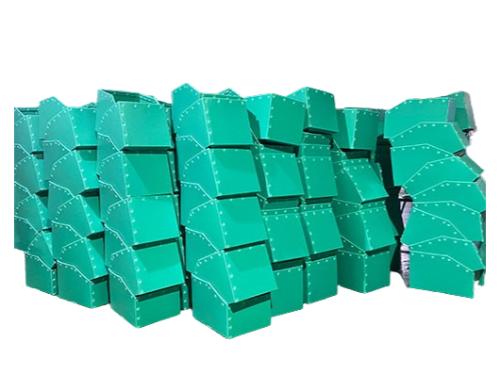
Across industries such as logistics, agriculture, manufacturing, retail, and automotive supply chains, coroplast bins have become a practical and efficient storage solution. Their combination of lightweight structure, durability, customization potential, and cost efficiency makes them suitable for a wide range of operational environments.
As businesses continue to optimize supply chain performance and reduce operational costs, the demand for adaptable and reusable storage systems like coroplast bins is expected to remain strong. Their versatility ensures they will continue to play a critical role in modern material handling and logistics infrastructure.
Top 5 Corrugated Plastic Sheets Manufacturer In China | 17 Years Of Export ExperienceDesign & Developed by VW Themes
WhatsApp us