
- Sophia@polyflute.com
- +86 15162372874
- Mon - Sat 8:00-20:00
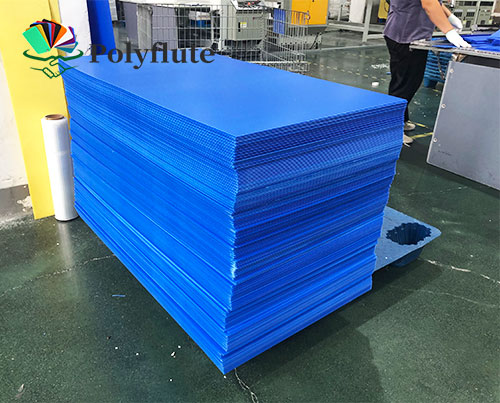
Coroplast sheets have become one of the most widely used plastic materials in the signage, packaging, agriculture, and industrial sectors. Their lightweight structure, durability, moisture resistance, and recyclability make them an excellent alternative to paperboard, wood, and certain metal products. Among the many available sizes, the 4×8 format has become the industry standard because it provides sufficient surface area for a wide variety of applications.
When purchasing 4 x 8 coroplast sheets, one of the most common questions buyers ask is, “How much do they cost?” The answer depends on several factors, including thickness, color, quantity, customization requirements, and supplier location.
This guide explores the pricing of coroplast sheets in detail and explains what influences costs, helping businesses make informed purchasing decisions.
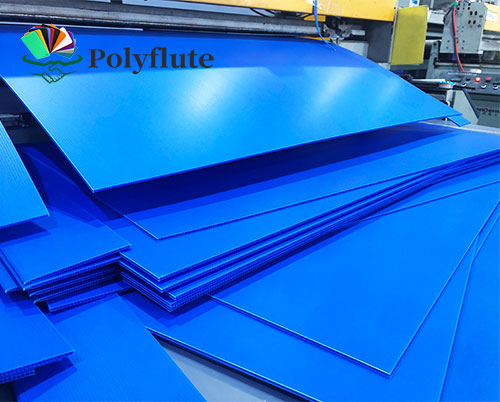
Coroplast is a twin-wall corrugated polypropylene sheet. Similar in appearance to corrugated cardboard, it features fluted channels between two flat surfaces. However, unlike cardboard, polypropylene sheets are waterproof, chemical-resistant, and suitable for both indoor and outdoor use.
Common applications include:
Because of their versatility, these sheets are widely used across many industries.
The most common size available in the market is 4 x 8 coroplast sheets, equivalent to:
This size is compatible with standard printing equipment and fabrication processes, making it highly popular among sign manufacturers and packaging companies.
Typical thickness options include:
| Thickness | Applications |
|---|---|
| 2 mm | Indoor signs, posters |
| 3 mm | Political signs, promotional signs |
| 4 mm | Real estate signs |
| 5 mm | Packaging and reusable boxes |
| 6 mm | Heavy-duty protection |
| 8–10 mm | Industrial applications |
Generally, thicker sheets cost more because they require additional polypropylene material.
The price of coroplast sheets varies according to thickness and quantity.
Approximate price:
Ideal for:
Approximate price:
Widely used for:
Approximate price:
Suitable for:
Approximate price:
Applications include:
Approximate price:
These are used for:
Several factors influence the cost of coroplast sheets.
Thickness is one of the most important price determinants.
As thickness increases:
For example, 10 mm sheets may cost several times more than 2 mm sheets.
White sheets are generally the most economical because they are produced in larger quantities.
Common colors include:
Custom colors often require:
As a result, colored sheets usually carry a premium.
Not all coroplast sheets are manufactured with the same density.
Higher-density sheets offer:
However, increased resin usage leads to higher prices.
Lightweight sheets are cheaper but may sacrifice strength.
Outdoor applications often require UV stabilization.
UV-treated sheets:
The addition of UV inhibitors increases production costs but significantly enhances durability.
Special grades are available for industries with strict requirements.
Examples include:
Used in:
Applied in:
These specialty products are considerably more expensive than standard sheets.
One of the biggest pricing factors is order volume.
Purchasing a few sheets from local distributors often results in higher costs because of:
Typical prices may range from:
Large wholesale orders reduce unit costs considerably.
For example:
| Quantity | Estimated Price |
|---|---|
| 100 sheets | $5–$8 |
| 500 sheets | $3–$6 |
| 1000 sheets | $2–$5 |
| Full container | Lowest pricing |
Container-load orders are usually the most cost-effective option for distributors and manufacturers.
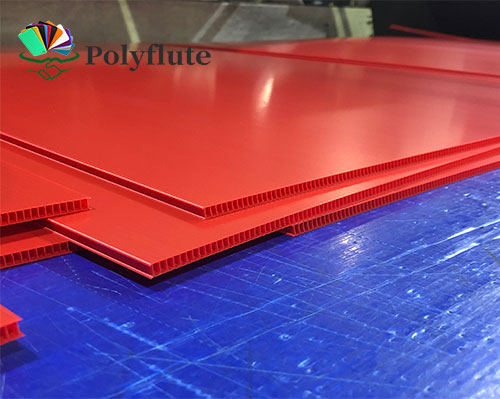
Many buyers require direct printing on 4 x 8 coroplast sheets.
Popular printing methods include:
Advantages:
Suitable for:
Ideal for:
Printing costs often range from:
depending on:
Some projects require additional processing.
Examples include:
Used to create:
Produces:
Enables:
Improves:
These secondary operations add to the overall project cost.
Advantages:
Disadvantages:
Advantages:
Disadvantages:
For businesses purchasing thousands of sheets, overseas sourcing often provides significant cost savings.
Shipping expenses should never be overlooked.
Factors influencing freight costs include:
Although coroplast is lightweight, large quantities increase shipping expenses.
The dimensions of 4 x 8 coroplast sheets occupy considerable space, making freight efficiency important.
Transportation costs vary according to:
Sheets may be:
International ocean freight is generally more economical for bulk orders.
Coroplast sheets provide excellent value because they are reusable and long-lasting.
Used for:
Ideal for:
Suitable for:
Applied in:
Used for:
Their durability often results in lower lifecycle costs compared with disposable materials.
Businesses can lower costs through several strategies.
Larger orders provide better pricing.
White sheets are typically the least expensive.
Avoid over-specifying material thickness.
Maximizing shipping efficiency lowers freight expenses.
Eliminating intermediaries reduces markups.
Ordering multiple products together can lower logistics costs.
The global demand for corrugated polypropylene sheets continues to grow due to:
These trends are expected to support steady demand for 4 x 8 coroplast sheets in the coming years.
Meanwhile, polypropylene resin prices and transportation costs can cause fluctuations in sheet prices.
When evaluating suppliers, buyers should consider:
Look for:
Large manufacturers can provide:
Including:
Important certifications may include:
Reliable communication ensures smooth order execution.
Selecting the right supplier is often more important than simply pursuing the lowest price.

The cost of 4 x 8 coroplast sheets depends on numerous variables, including thickness, color, density, quantity, printing requirements, and shipping expenses. Standard wholesale prices generally range from a few dollars per sheet for bulk purchases to more than twenty dollars for specialty products.
For distributors, sign makers, packaging manufacturers, and industrial users, understanding these pricing factors helps maximize value and optimize procurement costs. By choosing suitable specifications, purchasing in larger quantities, and working with experienced manufacturers, buyers can obtain high-quality coroplast sheets at highly competitive prices while ensuring long-term performance and reliability.