
- Sophia@polyflute.com
- +86 15162372874
- Mon - Sat 8:00-20:00

In modern packaging, signage, agriculture, and industrial applications, lightweight and durable sheet materials have become essential. Among them, corrugated polypropylene boards are widely recognized for their versatility, water resistance, and cost efficiency. One of the most in-demand formats in the global market is the standard large-sheet size commonly used for printing, fabrication, and protective packaging.
The growing demand for bulk sourcing has made China a leading manufacturing hub, offering stable production capacity, customizable specifications, and competitive pricing. Buyers from retail, construction, advertising, and logistics industries increasingly rely on Chinese exporters to meet large-volume requirements with consistent quality standards.

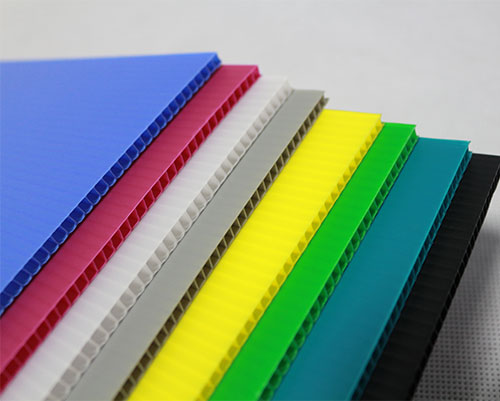
Corrugated plastic sheets are engineered using a twin-wall structure that provides strength while maintaining a lightweight profile. They are commonly used as alternatives to cardboard, PVC foam boards, and even thin plywood in certain non-structural applications.
Key properties include:
These advantages make them suitable for both indoor and outdoor applications, especially in environments where traditional paper-based materials would degrade quickly.
Corrugated polypropylene boards are produced in multiple variations to match different industrial and commercial requirements. Each type is engineered with specific physical or surface properties, allowing users to select the most suitable option based on performance needs.
Modern production facilities in China use extrusion technology to produce consistent sheet thickness and structural integrity. The process involves melting polypropylene resin, forming it into a hollow corrugated structure, and then cooling it under controlled conditions to ensure stability.
In large-scale industrial applications, dimensional accuracy is critical. A standard sheet size widely requested in international trade is 48 x 96 coroplast, which aligns with common printing and fabrication equipment used in North America and other markets.
Quality control typically includes:
Manufacturers also offer customization options such as anti-static treatment, flame retardant additives, and corona surface treatment for improved print adhesion.
Corrugated plastic sheets are widely used across multiple industries due to their adaptability and cost efficiency. The demand for large-format sheets continues to grow in sectors such as advertising, packaging, and agriculture.
Typical applications include:
In advertising and signage production, printers prefer flat, stable surfaces that can support UV printing and screen printing processes without warping or ink absorption issues. This is where the demand for standardized sheet sizes becomes particularly important.
Another widely adopted format in the export market is 48 x 96 coroplast, which is favored for its compatibility with CNC cutting machines and large-format digital printers. Its size efficiency helps reduce material waste during fabrication, making it a cost-effective choice for distributors and print shops.
China has developed a highly efficient supply chain for polymer-based sheet materials. From raw material procurement to extrusion and packaging, the entire production ecosystem is integrated, allowing for fast turnaround times and scalable output.
Key advantages include:
Another reason global buyers prefer sourcing is the ability to place OEM and ODM orders. This allows businesses to request specific colors, thickness levels, and surface treatments depending on their end-use requirements.
In many export catalogs, 48 x 96 coroplast is positioned as a standard industrial specification that simplifies ordering and reduces lead time for bulk procurement.
While the material appears simple, its engineering flexibility allows for a wide range of technical configurations. Manufacturers can adjust parameters based on application requirements.
Common specifications include:
Edge sealing and die-cutting services are also available for customers requiring finished components rather than raw sheets.
For printing applications, surface energy treatment is especially important to ensure ink adhesion. Without proper treatment, printed graphics may peel or fade over time, particularly in outdoor environments.
Efficient packaging plays a critical role in maintaining product integrity during long-distance shipping. Sheets are typically stacked, wrapped with protective film, and secured with reinforced pallets to prevent bending or edge damage.
Export shipments are optimized for container loading efficiency. Standardization of sheet dimensions allows suppliers to maximize space utilization within 20-foot and 40-foot containers.
For international buyers, lead times generally depend on order volume, customization requirements, and seasonal demand fluctuations. However, experienced suppliers maintain stable production schedules to ensure consistent delivery performance.
In global trade catalogs, 48 x 96 coroplast is often highlighted due to its compatibility with freight optimization systems and standardized pallet configurations.
Environmental concerns have driven demand for recyclable and reusable materials in both industrial and consumer markets. Corrugated polypropylene sheets are considered more sustainable than single-use cardboard or PVC alternatives in many applications.
Environmental advantages include:
Many manufacturers are also investing in closed-loop recycling systems, allowing used sheets to be reprocessed into new raw materials. This contributes to a more circular economy model within the plastics industry.
The global demand for lightweight plastic sheet materials continues to expand, driven by e-commerce growth, retail branding needs, and industrial logistics optimization.
Key trends include:
As industries continue to prioritize cost efficiency and sustainability, corrugated plastic sheets are expected to maintain strong market relevance. Standardized sizes such as 48 x 96 coroplast will remain essential due to their compatibility with existing machinery and global trade infrastructure.
Corrugated polypropylene sheets have become an essential material across multiple industries due to their durability, flexibility, and cost-effectiveness. From signage and packaging to agricultural and industrial applications, their versatility continues to drive global demand.
China remains one of the most important production hubs, offering scalable manufacturing, customization capabilities, and competitive pricing for international buyers. Standardized formats play a crucial role in simplifying logistics and production planning, ensuring efficiency across the supply chain.
With ongoing improvements in material science and recycling technology, the future of corrugated plastic sheets will continue to evolve toward higher performance and greater sustainability, making them a long-term solution for a wide range of applications.
Top 5 Corrugated Plastic Sheets Manufacturer In China | 17 Years Of Export ExperienceDesign & Developed by VW Themes
WhatsApp us