
- Sophia@polyflute.com
- +86 15162372874
- Mon - Sat 8:00-20:00
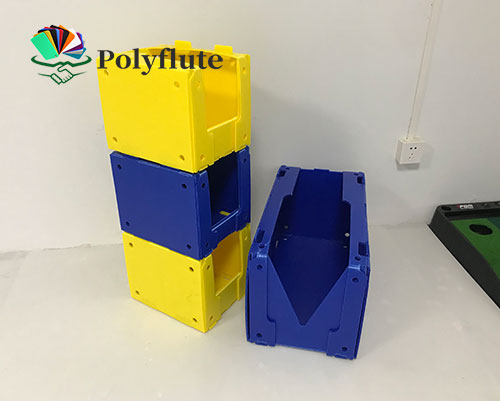
Efficient storage and order fulfillment are essential for modern warehouses. As inventory volumes increase and customer expectations continue to rise, businesses are constantly looking for ways to optimize storage capacity and improve picking efficiency. Among the most widely used storage solutions are warehouse racking bins and warehouse picking bins.
Although these two types of bins may appear similar, they are designed for different purposes and offer unique advantages. Understanding the differences between them can help warehouses improve organization, reduce labor costs, and enhance operational efficiency.
This article explores the characteristics, applications, benefits, and differences between warehouse racking bins and warehouse picking bins to help businesses select the right solution for their storage and logistics requirements.

Warehouse racking bins are storage containers specifically designed to fit within shelving and pallet racking systems. Their primary purpose is to maximize storage density while keeping inventory organized and easily accessible.
These bins are commonly used in:
Warehouse racking bins are typically made from durable materials such as:
Their structure enables them to withstand heavy loads while maintaining efficient use of vertical storage space.
Warehouse picking bins are containers optimized for order-picking operations. Their design focuses on quick access and easy identification of products.
These bins are frequently used in:
Picking bins often feature:
Their primary objective is to accelerate picking speed and reduce order errors.
Although both products serve storage purposes, they differ significantly in design and function.
| Feature | Warehouse Racking Bins | Warehouse Picking Bins |
|---|---|---|
| Main Function | Long-term organized storage | Fast item retrieval |
| Storage Density | High | Moderate |
| Accessibility | Good | Excellent |
| Inventory Protection | High | Medium |
| Picking Efficiency | Moderate | High |
| Space Utilization | Excellent | Good |
Warehouse racking bins emphasize maximizing storage capacity, while warehouse picking bins prioritize operational speed.
Warehouse racking bins are engineered to fit precisely within:
Their design often includes:
These features make them suitable for storing industrial parts, hardware, and bulk inventory.
Warehouse picking bins focus on accessibility. Common design characteristics include:
Workers can quickly locate and retrieve products without removing the entire container.

Plastic warehouse racking bins are popular because they offer:
They are suitable for:
Corrugated plastic bins provide several advantages:
These bins are often used for:
Steel bins provide exceptional durability and are used for:
Picking bins are usually manufactured from polypropylene or HDPE and offer:
Their lightweight construction makes them ideal for fast-moving inventory.
One of the biggest advantages of warehouse racking bins is efficient use of vertical space. By integrating with shelving systems, these bins increase storage density and reduce wasted floor area.
Racking bins help categorize products according to:
Improved organization reduces searching time and increases productivity.
Warehouse racking bins provide protection against:
This is especially important for electronics, automotive components, and precision parts.
Without designated containers, inventory can become disorganized and difficult to manage. Racking bins create structured storage zones that improve warehouse appearance and efficiency.
Many warehouse racking bins are compatible with:
This makes them suitable for modern smart warehouses.
Picking bins allow employees to access products immediately, reducing picking time and improving order throughput.
Features such as:
help minimize mistakes during order fulfillment.
Open-front designs reduce bending and reaching, helping workers maintain productivity while reducing fatigue.
Picking bins can be:
Their versatility supports changing inventory requirements.
Fast-moving inventory benefits greatly from picking bins because products are frequently accessed throughout the day.
Warehouse racking bins are widely used to store:
Their robust construction protects valuable components and keeps inventory organized.
Manufacturers rely on racking bins for:
Organized storage helps maintain efficient production lines.
Electronic components require protection from contamination and physical damage. Warehouse racking bins provide secure storage for:
Industrial distributors often use racking bins to store thousands of SKUs while maximizing shelf space.
Online retailers process thousands of orders daily. Picking bins help workers quickly retrieve:
Retail distribution centers use picking bins to speed up replenishment and reduce stock errors.
Picking bins help organize packaging materials and ingredients used in food processing facilities.
The answer depends on warehouse operations.
Absolutely.
Many warehouses integrate both systems to achieve optimal efficiency.
For example:
Warehouse racking bins store bulk inventory in pallet racking systems.
Warehouse picking bins hold smaller quantities of fast-moving products for daily order fulfillment.
This combination creates:
Choose bins that fit your products while maximizing storage capacity.
Heavy components require reinforced bins with strong bottoms and sidewalls.
Consider environmental conditions such as:
Ensure the bins fit:
Modern inventory systems often require:

When comparing warehouse racking bins vs warehouse picking bins, there is no universal winner. Each serves a different purpose within warehouse operations.
Warehouse racking bins excel in maximizing storage capacity, protecting products, and organizing bulk inventory. They are ideal for industrial storage and reserve inventory areas.
Warehouse picking bins, on the other hand, are designed for rapid access and efficient order fulfillment. They improve picking accuracy and productivity in high-volume environments.
For many warehouses, the most effective strategy is to combine both systems. By using warehouse racking bins for storage and picking bins for fulfillment, businesses can achieve better organization, higher efficiency, and lower operating costs.
As warehousing continues to evolve toward automation and smarter inventory management, selecting the right storage containers will remain an important factor in maintaining competitiveness and improving overall supply chain performance.