
Types of Warehouse Bin Boxes

0 Comments

Warehouse bin boxes are essential storage solutions designed to organize, protect, and streamline the handling of materials in warehouses, factories, distribution centers, and retail storage areas. As supply chains become more complex and inventory turnover increases, the need for efficient storage systems has never been greater. Bin boxes help businesses reduce clutter, improve picking efficiency, and optimize available space.

This article explores the most common types of warehouse bin boxes, their characteristics, and how they are used across different industrial environments.

What Are Warehouse Bin Boxes?

Warehouse bin boxes are modular storage containers used to hold, separate, and organize small to medium-sized items. They are typically made from plastic, metal, or sometimes reinforced cardboard, depending on the application.

They are widely used for:

  • Parts storage in manufacturing
  • Inventory organization in warehouses
  • Order picking systems
  • Tool storage in workshops
  • Retail backroom organization

Their primary goal is to improve accessibility and efficiency while maximizing storage density.

Importance of Warehouse Bin Boxes

Before exploring the types, it is important to understand why warehouse bin boxes are so widely used.

Improved Organization

Bin boxes help categorize products and materials clearly, reducing search time and human error during picking and packing.

Space Optimization

They are designed to stack, nest, or hang, allowing warehouses to use vertical and horizontal space efficiently.

Faster Operations

With clearly labeled bins, workers can quickly locate items, improving workflow speed.

Inventory Accuracy

Better organization leads to fewer misplaced items and improved inventory tracking.

Safety and Cleanliness

Keeping materials in bins reduces clutter and minimizes workplace hazards.

Types of Warehouse Bin Boxes

Warehouse bin boxes come in a wide variety of designs. Each type serves a specific purpose depending on storage needs, load capacity, and accessibility requirements.

1. Stackable Warehouse Bin Boxes

Stackable bins are one of the most commonly used storage solutions in warehouses.

Key Features

  • Designed to be safely stacked on top of each other
  • Reinforced edges for stability
  • Available in multiple sizes and load capacities

Advantages

  • Maximizes vertical storage space
  • Strong and durable
  • Ideal for heavy-duty storage environments

Applications

  • Manufacturing plants
  • Automotive parts storage
  • Industrial warehouses

Stackable bins are especially useful when floor space is limited but vertical space is available.

2. Nestable Warehouse Bin Boxes

Nestable bins are designed to fit inside one another when empty.

Key Features

  • Tapered design allows nesting
  • Lightweight construction
  • Easy to transport when empty

Advantages

  • Saves storage space when not in use
  • Reduces return shipping costs
  • Lightweight and easy to handle

Applications

  • Distribution centers
  • Retail logistics
  • Seasonal storage systems

Nestable bins are ideal for businesses that frequently move or store empty containers.

3. Collapsible Warehouse Bin Boxes

Collapsible bins are designed to fold down when not in use.

Key Features

  • Foldable side panels
  • Rigid structure when assembled
  • Space-saving design

Advantages

  • Extremely efficient storage when empty
  • Reduces warehouse clutter
  • Cost-effective for return logistics

Applications

  • Export packaging systems
  • Automotive supply chains
  • Large-scale distribution networks

These bins are especially useful in reverse logistics and shipping operations.

4. Louvered Bin Boxes

Louvered bins are designed for use with louvered panels or bin racks.

Key Features

  • Hooked back design for wall mounting
  • Easy access front opening
  • Often made of durable polypropylene

Advantages

  • Perfect for tool organization
  • Keeps small parts visible and accessible
  • Ideal for workstation setups

Applications

  • Workshops
  • Repair stations
  • Assembly lines

Louvered bins are commonly used where workers need quick access to frequently used parts.

5. Hanging Warehouse Bin Boxes

Hanging bins are similar to louvered bins but are designed to hang from rails or tracks.

Key Features

  • Hook or rail mounting system
  • Lightweight and portable
  • Easy to reposition

Advantages

  • Flexible layout configuration
  • Easy to reorganize storage space
  • Good visibility and accessibility

Applications

  • Electronics assembly
  • Hardware stores
  • Maintenance departments

Hanging bins are widely used in dynamic work environments where layouts change frequently.

6. Divided Bin Boxes

Divided bins feature internal compartments that separate different items within the same container.

Key Features

  • Internal partitions
  • Multiple compartments in one bin
  • Available in fixed or adjustable divider formats

Advantages

  • Prevents product mixing
  • Improves small parts organization
  • Reduces need for multiple containers

Applications

  • Screws, bolts, and fasteners storage
  • Electronics components
  • Jewelry or small accessory storage

Divided bins are ideal for managing multiple SKUs or small components.

7. ESD (Electrostatic Discharge) Bin Boxes

ESD bins are specialized containers designed for sensitive electronic components.

Key Features

  • Anti-static material construction
  • Conductive or dissipative properties
  • Often black or specially marked

Advantages

  • Protects electronic components from static damage
  • Meets industry safety standards
  • Essential for electronics manufacturing

Applications

  • Semiconductor factories
  • PCB assembly lines
  • Computer component storage

ESD bins are critical in industries where static electricity can damage sensitive products.

8. Heavy-Duty Warehouse Bin Boxes

Heavy-duty bins are built for demanding industrial environments.

Key Features

  • Thick-walled construction
  • High load-bearing capacity
  • Reinforced corners and bases

Advantages

  • Extremely durable
  • Long service life
  • Suitable for harsh environments

Applications

  • Automotive manufacturing
  • Metal parts storage
  • Industrial logistics centers

These bins are designed for long-term use under tough conditions.

9. Clear View Bin Boxes

Clear view bins are transparent or semi-transparent, allowing users to see contents without opening them.

Key Features

  • Transparent plastic material
  • Open-front or closed design
  • Labeling area included

Advantages

  • Easy identification of contents
  • Reduces time spent searching
  • Improves picking accuracy

Applications

  • Retail inventory storage
  • Medical supply storage
  • Office supply organization

Clear view bins improve efficiency in fast-paced environments.

10. Bulk Storage Bin Boxes

Bulk bins are large-capacity containers used for storing or transporting high-volume materials.

Key Features

  • Large size and capacity
  • Often used with forklifts
  • Stackable or pallet-compatible design

Advantages

  • Handles large quantities of goods
  • Reduces handling frequency
  • Suitable for heavy materials

Applications

  • Agriculture storage
  • Industrial raw materials
  • Large-scale distribution centers

Bulk bins are essential for handling bulk commodities efficiently.

How to Choose the Right Warehouse Bin Boxes

Selecting the right bin boxes depends on several operational factors.

1. Type of Material Stored

  • Heavy items require reinforced bins
  • Electronics require ESD protection
  • Small parts need divided bins

2. Storage Environment

  • Cold storage requires temperature-resistant materials
  • Outdoor storage needs UV-resistant plastic

3. Space Availability

  • Use stackable bins for vertical storage
  • Use nestable or collapsible bins for space-saving

4. Handling Method

  • Forklift operations require pallet-compatible bins
  • Manual picking benefits from open-front bins

5. Frequency of Use

  • Frequent access needs easy-open designs
  • Long-term storage can use closed containers

Applications of Warehouse Bin Boxes

Warehouse bin boxes are used across multiple industries, including:

  • Manufacturing and assembly lines
  • E-commerce fulfillment centers
  • Automotive parts warehouses
  • Retail stockrooms
  • Pharmaceutical storage facilities
  • Electronics production plants
  • Logistics and distribution hubs

Their versatility makes them a universal solution for modern storage challenges. Warehouse bin boxes are also widely used in aerospace maintenance facilities, food processing plants, and cold-chain storage environments where strict organization and hygiene standards are required. They support lean manufacturing systems by reducing waste and improving workflow efficiency. In addition, many companies integrate them with barcode labeling and automated tracking systems to enhance real-time inventory visibility and improve supply chain coordination.
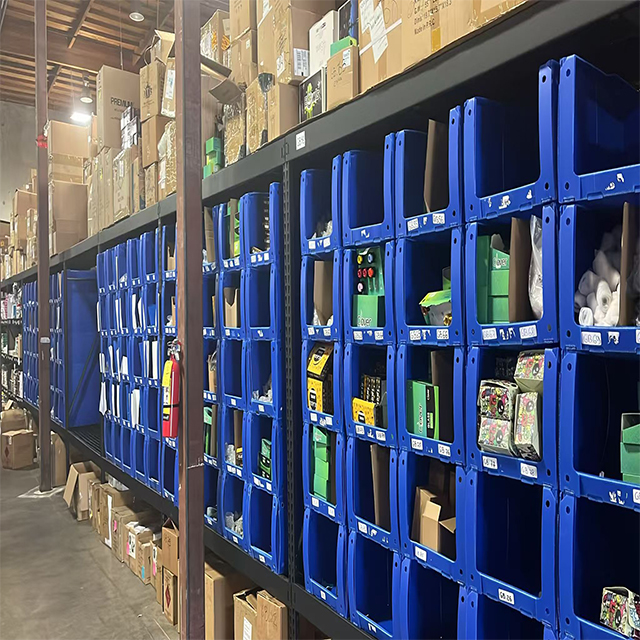
warehouse picking bins

Conclusion

Warehouse bin boxes play a crucial role in modern storage and logistics systems. With a wide range of types—such as stackable, nestable, collapsible, louvered, divided, ESD, and bulk bins—businesses can choose solutions tailored to their specific operational needs.

By selecting the right type of warehouse bin box, companies can significantly improve efficiency, reduce operational costs, and maintain better inventory control. As warehouse automation and supply chain complexity continue to grow, these storage solutions will remain a fundamental component of efficient warehouse management systems.


| Welcome to contact us now.
We will get back to you within 8 hours. We will offer latest price and free sample.

    -


    Categories:
    Top 5 Coroplast Manufacturer In China

    Top 5 Coroplast Manufacturer In China