
- Sophia@polyflute.com
- +86 15162372874
- Mon - Sat 8:00-20:00
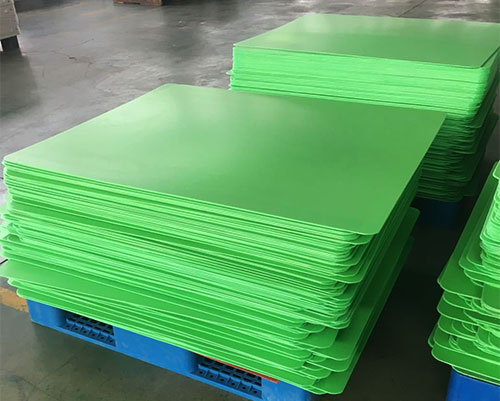
In modern industrial storage and logistics systems, efficiency, safety, and cost control are critical. As supply chains become more complex and globalized, companies are constantly looking for reliable ways to protect goods and maximize warehouse space. One of the most practical yet often underestimated solutions is the use of plastic pallet separators.
These simple but highly functional tools are widely used in manufacturing, warehousing, food distribution, pharmaceuticals, and export packaging. They improve stacking stability, reduce product damage, and enhance overall logistics efficiency.
This article provides a complete guide on how to choose plastic pallet separators, including types, applications, materials, selection criteria, and best practices.

Plastic pallet separators are flat or structured sheets made from industrial-grade plastic materials. They are placed between layers of products stacked on pallets to create separation, stability, and protection.
Their core functions include:
Compared to cardboard or wooden alternatives, plastic pallet separators offer higher durability, moisture resistance, and reusability, making them ideal for long-term industrial use.
Efficient palletization is essential for reducing logistics costs and preventing product loss. Plastic pallet separators contribute directly to operational performance in several ways.
Unstable stacking is one of the most common causes of warehouse accidents and product damage. Plastic separators create a uniform surface between layers, significantly improving load stability.
Products stored in multi-layer pallets are often exposed to:
Plastic pallet separators act as a protective buffer that minimizes these risks.
By allowing safer vertical stacking, businesses can:
Although initial investment is higher than cardboard sheets, plastic separators are reusable. Over time, this leads to lower total packaging costs and reduced waste.
Choosing the right material is essential for performance and durability. The two most common materials are:
Each material serves different industrial needs depending on load weight, environment, and usage frequency.
Different applications require different structural designs. Below are the most common types:
These are smooth, simple panels used for general stacking applications. They are lightweight and easy to handle, making them suitable for standard warehouse operations.
Designed with structural reinforcement patterns, these separators offer higher load-bearing capacity. They are commonly used in heavy manufacturing and export logistics.
Featuring small holes or vents, these separators improve airflow and are ideal for food storage or products requiring ventilation.
These have textured surfaces that reduce movement between layers, improving stability during transport and handling.
Some industries require customized sizes, thicknesses, or surface designs to match specific pallet systems or product shapes.
Selecting the right plastic pallet separators depends on multiple operational factors. Below are the most important considerations.
The weight of stacked goods determines the required thickness and strength.
Different environments require different material performance:
Surface design directly affects stability:
Plastic pallet separators must match standard pallet sizes, such as:
Proper sizing ensures maximum efficiency and safety.
For long-term industrial use, choose:
For export or one-time use, lightweight versions may be more economical.

Understanding how plastic pallet separators are made helps evaluate their quality.
High-grade PP or HDPE granules are selected based on required performance.
Depending on design complexity:
The molded plastic is cooled and stabilized to maintain structural integrity.
Sheets are cut into standard or customized dimensions, and edges are finished for safety.
Final products are tested for:
Plastic pallet separators are widely used across many industries.
The advantages extend beyond simple product protection.
Many companies reduce efficiency by making incorrect choices.
Avoiding these mistakes ensures long-term performance and safety.
Proper handling extends product lifespan significantly.
While plastic pallet separators may cost more initially than cardboard alternatives, the return on investment is significantly higher.
Over time, companies often achieve substantial savings in logistics operations.
The industry is evolving toward smarter and more sustainable solutions.
These innovations will further improve warehouse efficiency and supply chain transparency.
Before purchasing, ensure the following:
A structured checklist helps avoid costly mismatches.

Choosing the right plastic pallet separators is essential for improving warehouse efficiency, protecting goods, and optimizing logistics operations. Their durability, reusability, and adaptability make them a superior alternative to traditional materials such as cardboard or wood.
By carefully considering load requirements, material type, environmental conditions, and application needs, businesses can significantly enhance operational performance while reducing long-term costs.
In today’s competitive supply chain environment, plastic pallet separators are no longer just an optional accessory—they are a key component of efficient, modern logistics systems.