
- Sophia@polyflute.com
- +86 15162372874
- Mon - Sat 8:00-20:00

In modern logistics and warehouse management, companies are constantly searching for ways to reduce costs, improve efficiency, and optimize storage space. One increasingly popular solution is plastic pallet slip sheets. As an alternative to traditional wooden pallets, plastic slip sheets pallets provide a lightweight, hygienic, and cost-effective load handling method across industries such as food processing, pharmaceuticals, retail distribution, and manufacturing.
This comprehensive guide explores the types of plastic pallet slip sheets available in the market and provides a detailed selection guide to help you choose the right option for your application.
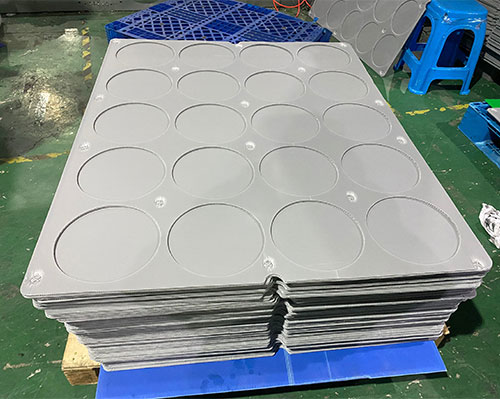
Plastic pallet slip sheets are thin, flat sheets made primarily from high-density polyethylene (HDPE) or polypropylene (PP). They are designed to replace traditional pallets in material handling systems. Instead of lifting loads from underneath like a standard pallet, a forklift equipped with a push-pull attachment grips the extended lip (tab) of the slip sheet and pulls the load onto a special platen.
Compared to wooden pallets, plastic slip sheets pallets offer several advantages:
Because they are typically only 0.6 mm to 2.0 mm thick, plastic pallet slip sheets dramatically reduce freight weight while maintaining sufficient strength for heavy loads.
Understanding the different types of plastic pallet slip sheets is essential when making a purchasing decision. The classification usually depends on material type, tab configuration, surface design, and load capacity.
High-Density Polyethylene (HDPE) is the most common material used for plastic slip sheets pallets.
Key Characteristics:
HDPE plastic pallet slip sheets are widely used in export logistics because they do not require fumigation, unlike wooden pallets. This makes them ideal for international shipping and industries with strict hygiene requirements.
They are especially popular in food and beverage, pharmaceuticals, and chemical industries due to their durability and resistance to contamination.
Polypropylene slip sheets offer slightly different performance characteristics compared to HDPE.
Advantages:
PP plastic pallet slip sheets are often used in situations where loads are evenly distributed and static. They are suitable for warehouse storage and automated systems where flexibility and long-term reusability are important.
If your operation involves automated palletizing systems, PP slip sheets pallets can offer excellent performance with minimal deformation.
Tab configuration plays a crucial role in operational efficiency. A single-tab design includes one extended edge (lip) that allows a push-pull forklift attachment to grip the sheet.
Best For:
Single-tab plastic pallet slip sheets are the most economical option. However, they may require precise alignment during loading and unloading.
Double-tab slip sheets include two opposite extended lips. This design allows loading and unloading from two directions.
Advantages:
Double-tab plastic pallet slip sheets are ideal for distribution centers with high throughput and varying forklift approach directions.
For maximum flexibility, four-tab plastic pallet slip sheets provide lips on all four sides.
Ideal Applications:
Although slightly more expensive, four-tab plastic slip sheets pallets greatly improve efficiency in environments where loads may be accessed from multiple directions.
Some plastic pallet slip sheets are manufactured with textured or anti-slip surfaces to prevent load shifting.
Benefits:
Anti-slip plastic slip sheets pallets are especially useful when transporting shrink-wrapped goods, cartons, or bagged materials.
Heavy-duty plastic pallet slip sheets are designed for high load capacities, often exceeding 1,500 kg or more depending on thickness and material composition.
They are commonly used in:
These sheets are thicker and may feature reinforced edges to prevent tearing under heavy loads.

Choosing the correct pp slip sheets requires evaluating multiple operational and environmental factors.
The total weight and how it is distributed across the surface significantly affect the required thickness and material type.
Always consult load-bearing specifications from your supplier before purchasing plastic slip sheets pallets.
Plastic pallet slip sheets require forklifts equipped with push-pull attachments. Before implementation:
If your warehouse currently uses standard forklifts without push-pull attachments, additional investment may be necessary.
Common thickness ranges:
Thicker pp slip sheets provide greater durability but increase material cost. Finding the balance between strength and cost efficiency is crucial.
Consider where the slip sheets pallets will be used:
Plastic pallet slip sheets outperform wooden pallets in humid and wet environments.
Some operations use pp slip sheets for single export shipments, while others reuse them multiple times.
For reusable applications:
For single-use exports, lighter and more economical versions may be sufficient.
Industries such as food, pharmaceuticals, and healthcare require clean and contamination-free load supports.
Plastic slip sheets pallets are:
This makes them compliant with many international shipping standards.
Many companies transitioning from wooden pallets to plastic pallet slip sheets report substantial operational improvements:
Plastic pallet slip sheets are widely adopted in:
Global exporters especially benefit because pp slip sheets eliminate fumigation costs and reduce container weight.
Switching to plastic pallet slip sheets requires planning:
Gradual integration often yields the best results.
When selecting pp slip sheets, avoid:
A strategic approach ensures maximum performance and cost efficiency.
Plastic pallet slip sheets are transforming modern logistics by offering a lightweight, hygienic, and cost-effective alternative to traditional pallets. Understanding the different types—from HDPE and PP materials to single-tab, double-tab, and heavy-duty configurations—is essential for making the right investment.
When selecting pp slip sheets, consider load weight, environmental conditions, forklift compatibility, thickness requirements, and reusability needs. By carefully evaluating these factors, businesses can significantly reduce shipping costs, optimize storage space, and improve operational efficiency.
As global supply chains continue to demand smarter, more sustainable solutions, pp slip sheets are becoming an indispensable component of efficient material handling systems.
If implemented correctly, they not only replace traditional pallets but also unlock new levels of logistics optimization and long-term cost savings.