
- Sophia@polyflute.com
- +86 15162372874
- Mon - Sat 8:00-20:00
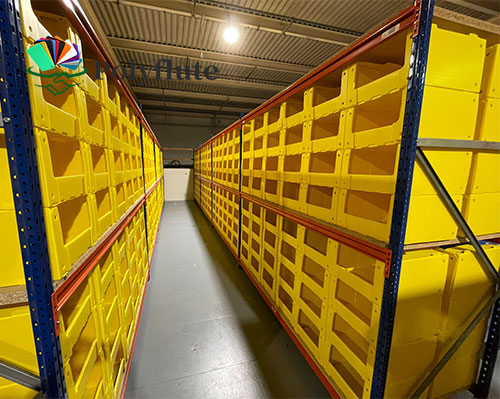
In modern warehouses, factories, workshops, and retail backrooms, stackable parts bin systems have become a core element of efficient material handling. Instead of wasting time searching, counting, or reorganizing loose components, businesses rely on stacking parts bins to keep small items visible, accessible, and controlled.
Whether used on shelves, racks, carts, or workbenches, stackable plastic parts bins,also called stackable picking bins, are designed to scale with operations—vertically, horizontally, and functionally. Choosing the right bin type and matching it with the right industry application can significantly improve workflow speed, inventory accuracy, and floor space utilization.
This article focuses on the main types of stackable parts bin systems and explores how different industries apply them in real-world operations.
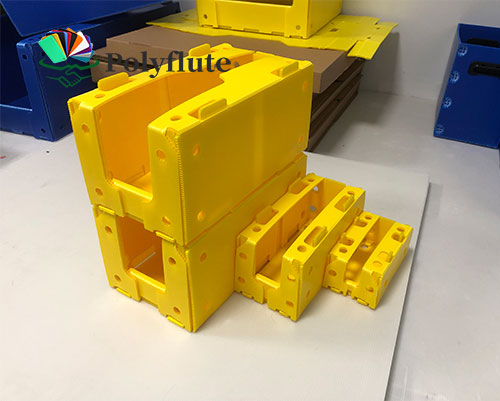
Not all stackable parts bins are built the same. Differences in structure, opening style, load capacity, and stacking behavior determine where and how each type performs best.
Open-front stackable parts bins are among the most widely used designs in industrial and commercial environments. Their defining feature is the slanted or straight front opening, which allows users to access contents without removing the bin from a stack or shelf.
Key characteristics include:
These stacking parts bins are ideal for fast-moving components such as screws, bolts, connectors, and electrical fittings. In assembly environments, open-front bins reduce motion waste by keeping parts within arm’s reach.
Closed stackable parts bins feature solid sides and tops, offering greater protection from dust, debris, or accidental spillage. Some designs include removable lids, while others are permanently enclosed.
Common advantages include:
Stackable plastic parts bins with closed designs are often used where cleanliness or part integrity is critical, such as electronics manufacturing or medical component storage.
Interlocking stackable parts bins are engineered with precise bottom and rim geometries that lock into each other when stacked. This design improves stability, especially in taller vertical stacks.
Why industries choose interlocking stacking parts bins:
These bins are commonly used in logistics centers and production lines where bins are frequently moved while stacked.
Divider-compatible stackable parts bins allow users to subdivide interior space into multiple compartments. This flexibility is especially valuable for operations handling a wide variety of small SKUs.
Benefits include:
Stackable plastic parts bins with dividers are widely used in maintenance departments and tool rooms where part variety is high but quantities are low.
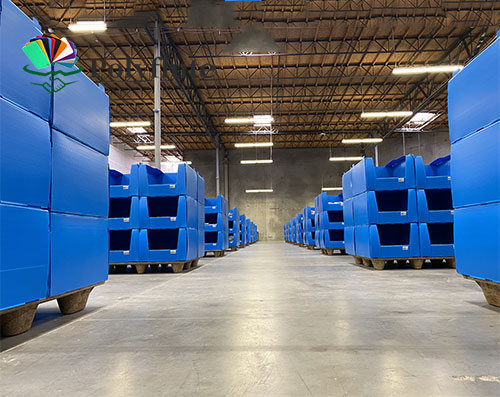
Heavy-duty stackable parts bins are designed for higher load capacities and more demanding environments. They typically feature thicker walls, reinforced corners, and stronger stacking rims.
Typical features:
These stacking parts bins are often found in automotive, metalworking, and industrial spare parts storage.
Some stackable parts bins are designed to function both as stackable units and as hanging bins on louvered panels. This hybrid flexibility allows businesses to reconfigure storage layouts without replacing bins.
Use cases include:
This versatility makes hybrid stackable plastic parts bins popular in maintenance and repair environments.
Most stackable parts bin systems are manufactured from plastic due to its versatility and cost efficiency. However, not all plastics perform the same way.
Common material factors include:
High-quality stackable plastic parts bins maintain shape under load, resist cracking, and stack consistently over long service lives.
Different industries use stackable parts bins in distinct ways, driven by part size, handling frequency, cleanliness requirements, and inventory turnover.
In manufacturing environments, stackable parts bins are deeply integrated into daily workflows. Assembly lines rely on stacking parts bins to ensure consistent part availability at each workstation.
Common applications include:
By stacking vertically, manufacturers reduce floor congestion while keeping critical components within reach.
Automotive production and aftermarket service centers use stackable parts bins for both small fasteners and mid-sized mechanical parts.
Typical use scenarios:
Heavy-duty stacking parts bins are especially valued in this industry due to the weight and sharp edges of metal components.
In warehouses, stackable parts bin systems support both picking efficiency and space optimization.
Key applications include:
Stackable plastic parts bins allow warehouses to reconfigure shelving layouts quickly as inventory profiles change.
Electronics manufacturers and distributors depend on stackable parts bins for managing high-SKU-count inventories.
Common stored items include:
Closed or ESD-safe stackable parts bins are often selected to protect sensitive electronic components from dust and static discharge.
MRO departments rely on stacking parts bins to maintain uptime and reduce downtime caused by missing parts.
Typical uses:
Divider-equipped stackable parts bins help maintenance teams quickly identify shortages before equipment failures occur.
While not always visible, stackable plastic parts bins play a critical role behind the scenes in healthcare and laboratory settings.
Applications include:
In these environments, material quality and ease of cleaning are key selection factors.
Retailers and e-commerce operations use stackable parts bins to manage high-volume, small-item inventories.
Common scenarios:
Stacking parts bins improve order accuracy while minimizing storage footprint.
Mobile crews often transport stackable parts bins directly to job sites.
Use cases include:
Interlocking stackable parts bins are preferred for transport due to improved stability during movement.
Across industries, the adoption of stackable parts bin systems delivers consistent operational advantages.
Key benefits include:
When combined with clear labeling and standardized bin sizes, stackable plastic parts bins become a scalable storage backbone rather than just containers.

Selecting the right stackable parts bin involves aligning bin features with operational realities.
Consider the following factors:
Businesses that standardize on a limited range of stacking parts bins often achieve better long-term efficiency and lower replacement costs.
A well-designed stackable parts bin system is not just about storage—it is about workflow, accuracy, and scalability. From manufacturing floors to e-commerce fulfillment centers, stackable plastic parts bins support faster operations and smarter use of space.
By understanding the main types of stackable parts bins and how different industries apply them, businesses can build storage systems that grow alongside their operations instead of limiting them.