
- Sophia@polyflute.com
- +86 15162372874
- Mon - Sat 8:00-20:00

Modern logistics operations are under constant pressure to move faster, store smarter, and reduce overall costs without sacrificing reliability. Whether in large-scale distribution centers, manufacturing plants, or regional warehouses, storage and handling systems play a decisive role in operational efficiency. Among the many storage options available today, warehouse plastic boxes have become a core component of logistics solutions across industries.
From high-volume inventory turnover to long-term storage, plastic containers—especially those made from PP (polypropylene)—offer a combination of durability, flexibility, and cost efficiency that traditional materials struggle to match. As supply chains continue to evolve, businesses are increasingly turning to PP-based warehouse plastic boxes, plastic warehouse bins, and warehouse storage tubs to optimize workflows and maintain consistency in demanding environments.
This article explores how warehouse plastic boxes made from PP material support modern logistics solutions, why they outperform many alternatives, and how they can be tailored to different warehousing needs.

Logistics today is no longer just about storage—it is about speed, accuracy, and adaptability. Warehouses must handle frequent picking, sorting, stacking, and transportation, often under tight timelines. Storage containers must withstand repeated use while remaining lightweight and easy to handle.
Warehouse plastic boxes have become indispensable because they:
Unlike disposable packaging, reusable plastic containers align with long-term operational planning. Their consistent dimensions and reliable performance help logistics teams reduce errors, improve space utilization, and streamline inventory management.
Among various plastic materials, polypropylene (PP) stands out as the preferred choice for warehouse plastic boxes used in logistics solutions. Its physical and chemical properties make it exceptionally suitable for repeated industrial use.
PP warehouse plastic boxes offer excellent load-bearing capacity while remaining lightweight. This balance is critical in logistics environments where containers are frequently lifted, stacked, or moved manually and by machinery. Lighter boxes reduce labor fatigue and lower transportation costs, especially when handling large volumes.
Warehouses are dynamic spaces where containers may be dropped, bumped, or shifted. PP material absorbs impact better than many other plastics, minimizing cracking or breakage. This durability ensures longer service life and lower replacement costs.
Unlike wood or metal, PP does not absorb moisture or corrode. This makes PP warehouse plastic boxes suitable for:
For industries such as food processing, pharmaceuticals, and electronics, moisture resistance is particularly important.
PP plastic warehouse bins and storage tubs have smooth surfaces that resist dirt buildup. They can be easily washed, sanitized, or disinfected, helping maintain hygiene standards and improving overall warehouse cleanliness.
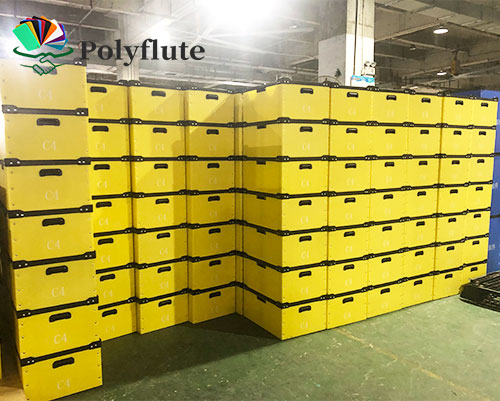
When evaluating logistics solutions, many businesses compare warehouse plastic boxes with alternatives such as cardboard cartons, metal containers, or wooden crates.
Cardboard may appear cost-effective initially, but it degrades quickly in high-use environments. PP warehouse plastic boxes provide:
In the long run, plastic boxes significantly reduce packaging waste and operational costs.
Metal bins offer strength but are heavy and prone to corrosion. PP plastic warehouse bins achieve similar functionality with added benefits:
Wooden storage solutions can splinter, absorb moisture, and harbor contaminants. PP warehouse storage tubs eliminate these issues while offering a cleaner, more standardized solution.
In fast-paced logistics environments, plastic warehouse bins are essential for order picking, sorting, and component storage. PP bins are commonly used on shelving systems, workstations, and conveyor lines.
PP plastic warehouse bins improve picking accuracy and reduce handling time, especially in e-commerce fulfillment centers and manufacturing warehouses.
Many PP warehouse plastic boxes are engineered to be stackable when full and nestable when empty. This feature optimizes both storage density and return logistics, saving valuable warehouse space.
For bulk storage or larger items, warehouse storage tubs made from PP offer a robust solution. These tubs are widely used in automotive, industrial manufacturing, and agricultural logistics.
PP warehouse storage tubs are designed with reinforced walls and bases to support heavy loads without deformation. They maintain structural integrity even under long-term stacking.
Warehouse storage tubs can be used for:
Their versatility makes them an essential part of integrated logistics systems.
As warehouses adopt automation, storage containers must meet strict dimensional and performance standards. PP warehouse plastic boxes are widely compatible with:
Their uniform size, rigidity, and predictable behavior ensure smooth operation in automated environments, reducing downtime and system errors.

One of the major advantages of PP material is its adaptability to customization. Manufacturers can tailor warehouse plastic boxes to specific logistics requirements.
PP boxes can be produced in various dimensions to match:
Color-coded plastic warehouse bins help distinguish product categories, process stages, or departments, improving visual management and reducing mistakes.
Options such as embossed logos, printed markings, or labeling areas allow businesses to integrate branding and tracking into their warehouse plastic boxes.
Sustainability is no longer optional in logistics—it is a strategic consideration. PP warehouse plastic boxes contribute to more sustainable operations by:
Although the initial investment may be higher than disposable packaging, the long lifespan and reusability of PP boxes result in lower total cost of ownership.
PP-based warehouse plastic boxes are used across a wide range of industries, including:
Their adaptability allows them to meet industry-specific handling, hygiene, and durability requirements.
Selecting the right warehouse plastic boxes involves more than choosing a size. Key considerations include:
Working with an experienced manufacturer ensures that PP plastic warehouse bins and warehouse storage tubs are optimized for your specific logistics workflow.
As logistics operations grow more complex, the need for reliable, efficient, and adaptable storage solutions becomes increasingly important. Warehouse plastic boxes made from PP material provide a proven answer to these challenges.
By combining durability, lightweight handling, customization, and long-term cost efficiency, PP plastic warehouse bins and warehouse storage tubs support smoother operations across the entire supply chain. For businesses looking to improve warehouse organization, reduce waste, and enhance logistics performance, investing in high-quality PP warehouse plastic boxes is not just a practical choice—it is a strategic one.