
- Sophia@polyflute.com
- +86 15162372874
- Mon - Sat 8:00-20:00
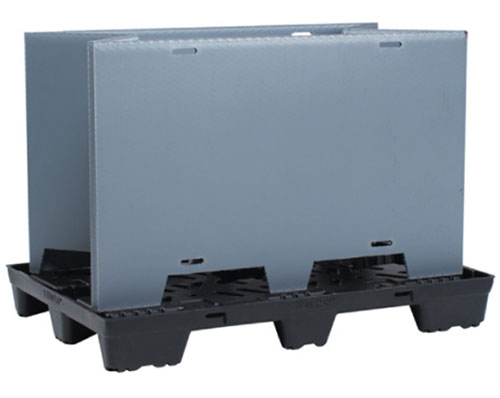
In modern logistics, warehousing, and industrial transportation systems, boxpalet plastic solutions have become an essential tool for handling, storing, and shipping goods across a wide range of pallet types. From standard Euro pallets to custom-sized industrial pallets, plastic box pallets offer flexibility, durability, and compatibility that traditional containers often fail to provide.
Rather than being limited to one pallet format, today’s box pallet plastic designs are engineered to work efficiently with many different pallets, making them ideal for manufacturers, distributors, and export-oriented businesses that operate in complex supply chains.

One of the strongest advantages of boxpalet plastic is its ability to integrate seamlessly with various pallet standards used worldwide.
In international logistics, pallet dimensions and load requirements can differ significantly depending on region and industry. Plastic box pallets are commonly designed to fit:
Because box pallet plastic units are molded with reinforced bases and standardized forklift entry points, they can be placed securely on top of different pallet sizes without compromising stability. This adaptability reduces the need to stock multiple container types, simplifying warehouse management and lowering overall packaging costs.
When discussing boxpalet plastic cu capac, load capacity is one of the most critical factors. These containers are designed to withstand heavy static and dynamic loads while maintaining structural integrity over long periods of use.
High-quality boxpalet plastic products typically feature:
Depending on the design, a box pallet plastic can support loads ranging from several hundred kilograms to over one ton when stacked. This makes them suitable for industries such as automotive parts, metal components, chemicals, and bulk agricultural products.
Stackability is a major consideration when using boxpalet plastic for many different pallets. Whether used in warehouses with high-bay racking systems or in transport vehicles, the ability to stack safely is essential for space optimization.
Many box pallet plastic models are engineered with stacking rims or interlocking corners, allowing them to sit securely on pallets of varying sizes. When combined with compatible pallets, these containers can be stacked multiple layers high without slippage or deformation.
For businesses dealing with export logistics, this stacking capability helps maximize container and truck space, reducing shipping costs per unit.

For goods that require protection from dust, moisture, or contamination, boxpalet plastic cu capac offers an additional level of security. The lid (capac) plays a vital role in maintaining product quality throughout the supply chain.
Applications where lids are especially valuable include:
A well-fitted capac ensures that the box pallet plastic remains closed during handling, even when placed on different pallet types. This is particularly important in automated logistics systems where containers are frequently moved by forklifts, conveyors, or robotic arms.
Another reason why boxpalet plastic works well with many different pallets is its compatibility with a wide range of handling equipment.
These containers are designed for:
Because box pallet plastic units are dimensionally stable and resistant to deformation, they maintain consistent performance even when transferred between different pallet bases. This reduces handling errors and improves overall workflow efficiency.
In manufacturing environments, especially automotive production, components often move between facilities that use different pallet standards. Boxpalet plastic provides a reliable solution that can be easily transferred from one pallet type to another without repacking.
Heavy-duty designs with high load capacities are commonly used for engine parts, metal assemblies, and molded components.
Agricultural products often require containers that can adapt to various pallets used in farms, processing plants, and distribution centers. Box pallet plastic cu capac is particularly popular for fruits, vegetables, grains, and processed food ingredients.
The smooth internal surfaces and easy-to-clean materials help maintain hygiene standards, while compatibility with different pallets simplifies logistics during harvest seasons.
For chemical powders, granules, or packaged liquid containers, boxpalet plastic offers chemical resistance and secure containment. When paired with lids, these box pallets help prevent contamination and spillage during transport across facilities using different pallet systems.
In recycling and waste management operations, boxpalet plastic is widely used for collecting, sorting, and transporting recyclable materials such as plastics, metals, and electronic waste. These environments often involve different pallet sizes across collection points, processing facilities, and transfer stations. The ability of box pallet plastic containers to remain stable on multiple pallet standards helps streamline internal logistics while reducing handling time and material loss.
Their impact-resistant structure also makes them suitable for heavy, irregular loads commonly found in recycling applications.
In high-volume logistics and distribution centers, boxpalet plastic plays a crucial role in consolidating goods moving through different pallet systems. Products may arrive on one pallet type and leave on another, making container adaptability essential. Box pallet plastic units allow goods to be transferred without repacking, improving efficiency and reducing labor costs.
When used with lids, these containers also protect mixed or high-value goods during storage and cross-docking operations.
Although the initial investment in box pallet plastic may be higher than single-use packaging, the long-term cost benefits are significant.
Key economic advantages include:
Because boxpalet plastic can be used across multiple pallet types, companies avoid purchasing separate containers for different markets or logistics partners.
Sustainability is increasingly important in global logistics. Box pallet plastic contributes to environmental goals by reducing waste and promoting reuse.
Many manufacturers produce boxpalet plastic units from recyclable materials, and at the end of their service life, they can be recycled into new products. The long lifespan also reduces the overall environmental footprint compared to disposable packaging.
Using one box pallet plastic solution for many different pallets further minimizes material consumption and storage requirements.

Modern box pallet plastic products are available with extensive customization options to meet specific pallet compatibility needs.
Common customization features include:
These options allow businesses to tailor boxpalet plastic cu capac solutions that work seamlessly across diverse pallet environments.
By standardizing on boxpalet plastic containers that function with many pallet types, companies can streamline their supply chains. This standardization reduces handling time, minimizes repacking, and improves traceability across different logistics stages.
In multi-country operations where pallet standards vary, box pallet plastic acts as a universal transport unit, bridging the gap between different systems.
Choosing boxpalet plastic for many different pallets is a strategic decision for businesses seeking flexibility, durability, and efficiency in modern logistics. With strong load-bearing capacity, compatibility with various pallet standards, and options like boxpalet plastic cu capac for added protection, these containers offer a versatile solution for a wide range of industries.
As supply chains become more complex and globalized, the ability to rely on a single box pallet plastic system across different pallets is no longer just an advantage—it is a necessity for competitive and sustainable operations.