
- Sophia@polyflute.com
- +86 15162372874
- Mon - Sat 8:00-20:00

In today’s fast-paced supply chain and logistics environment, operational efficiency is crucial. One of the most effective tools for improving warehouse organization and productivity is the use of warehouse stackable bins. Businesses that adopt these bins experience measurable benefits across inventory management, space utilization, and workflow optimization. While traditional storage methods may seem adequate, stackable bins offer a level of flexibility and practicality that can significantly elevate warehouse operations.
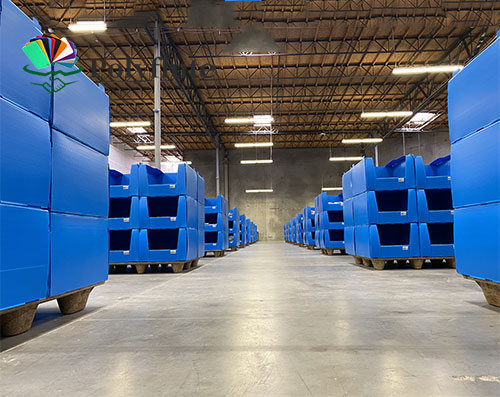
Warehouse space is often one of the most critical and costly resources for any business. Traditional shelving systems or unorganized storage areas can lead to wasted vertical and horizontal space. Warehouse stackable bins are designed to maximize storage density, allowing businesses to store more items in less space. By stacking bins vertically, warehouses can take full advantage of unused vertical areas, which are often overlooked in conventional setups. This not only frees up valuable floor space but also reduces the need for expensive warehouse expansion.
Vertical stacking also ensures that inventory is systematically organized, making it easier to locate and retrieve items. Companies that implement stackable bin systems frequently notice a reduction in clutter, which improves both safety and workflow efficiency. This optimized use of space translates into cost savings and a higher return on existing warehouse infrastructure.
Effective inventory management is a cornerstone of operational success. Stackable warehouse bins contribute to better inventory visibility, organization, and accuracy. By categorizing items into individual bins, staff can quickly identify stock levels and maintain proper order without manually sifting through piles or boxes. Each bin can be labeled, color-coded, or assigned a specific location, further simplifying inventory tracking and reducing errors.
Improved inventory organization also supports faster stocktaking and cycle counting processes. When items are stored in clearly defined stackable bins, counting becomes a straightforward task, minimizing disruption to regular warehouse operations. This precision reduces the likelihood of overstocking or stockouts, ensuring that businesses can meet customer demands without excess inventory carrying costs.
Efficiency is a top priority in any warehouse. Warehouse stackable bins streamline daily operations by enabling faster picking, packing, and shipping processes. Staff can easily access items stored in bins without unnecessary bending, lifting, or searching, which reduces fatigue and enhances productivity. The uniform design of stackable bins allows workers to handle multiple items at once, improving the speed of order fulfillment.
In high-volume warehouses, where order accuracy and turnaround times are critical, stackable bins minimize errors and bottlenecks. They also facilitate smoother workflow planning. For instance, bins containing items for specific orders or assembly lines can be pre-positioned in strategic locations, allowing workers to perform their tasks with minimal movement. This structured approach increases throughput and overall warehouse efficiency.
One of the standout advantages of warehouse stackable bins is their versatility. These bins are suitable for a wide range of industries, from manufacturing and automotive to retail and pharmaceuticals. Regardless of the type of goods—small components, raw materials, finished products, or fragile items—stackable bins can accommodate varying shapes and sizes. Many bins are designed with adjustable dividers, allowing for customized storage solutions that meet specific operational needs.
This adaptability ensures that companies do not have to invest in multiple types of storage systems. A single stackable bin solution can serve multiple purposes, whether it is for raw material storage, assembly line organization, or shipping preparation. Businesses benefit from reduced equipment costs, simplified training, and consistent operational standards.
Warehouse safety is a critical concern, and improper storage is a leading cause of workplace accidents. Stackable warehouse bins contribute to a safer environment by keeping items securely contained and organized. Unlike loose pallets or boxes, stackable bins prevent materials from falling or shifting unexpectedly, reducing the risk of injury to staff.
Additionally, these bins provide a layer of protection for the stored items themselves. Fragile or sensitive goods are less likely to be damaged when they are contained in individual bins rather than being piled haphazardly. This can translate into significant cost savings by reducing product loss and the need for replacements.

Standardization is essential for large-scale warehouse operations. Using warehouse stackable bins allows businesses to implement uniform storage solutions across multiple locations. This consistency simplifies training, improves workflow coordination, and ensures that operational standards are maintained regardless of location or staff changes.
Moreover, stackable bins support scalable growth. As a warehouse expands or as inventory levels increase, additional bins can be integrated seamlessly into the existing system. There is no need for costly reconfiguration of shelving or storage units, making stackable bins an investment that grows with the business. This scalability is particularly valuable for e-commerce operations and seasonal businesses where inventory fluctuates significantly.
Modern warehouses are increasingly incorporating automation, such as conveyor systems, robotic pickers, and automated storage retrieval systems. Stackable warehouse bins are highly compatible with these technologies. Their standardized sizes and stackable design allow robots and automated systems to handle bins efficiently, reducing manual labor and improving accuracy.
Automated warehouses benefit from the predictability and uniformity provided by stackable bins. Bins can be easily moved, sorted, and delivered to workstations without human intervention. This integration not only enhances efficiency but also positions businesses for future growth as automation becomes more prevalent.
Sustainability is a growing concern in logistics and warehouse management. Warehouse stackable bins contribute to eco-friendly operations in several ways. By optimizing storage space, they reduce the need for additional warehouse construction or expansion, thereby minimizing resource consumption. Durable bins are reusable and often made from recyclable materials, decreasing reliance on disposable packaging and reducing environmental impact.
In addition, efficient bin storage minimizes product damage, waste, and overproduction, which further supports sustainability objectives. Companies seeking to improve their green credentials can leverage stackable bins as part of a comprehensive strategy for responsible and efficient warehouse operations.
Investing in stackable warehouse bins often results in substantial cost savings over time. While the initial purchase represents a capital expense, the benefits in space optimization, labor efficiency, and reduced product damage generate a positive return on investment. By improving workflow efficiency and reducing the risk of inventory errors, businesses can save on operational costs while increasing throughput and customer satisfaction.
Furthermore, stackable bins are long-lasting and require minimal maintenance. Unlike wooden crates or cardboard boxes, durable plastic or metal bins withstand frequent handling, heavy loads, and varying environmental conditions without deteriorating. This durability further enhances the cost-effectiveness of adopting stackable storage solutions.
To fully leverage the benefits of warehouse stackable bins, partnering with a reliable stackable warehouse bins manufacturer is essential. Manufacturers with expertise in designing high-quality, durable, and versatile bins can provide tailored solutions that meet specific operational requirements. They can offer advice on bin sizes, weight capacities, materials, and stacking systems to optimize both storage efficiency and safety.
A reputable manufacturer also ensures consistent product quality, timely delivery, and after-sales support, which is crucial for large-scale operations. Working closely with a trusted manufacturer allows warehouses to implement customized solutions that maximize efficiency and minimize disruptions.

The adoption of warehouse stackable picking bins offers tangible benefits that extend across space utilization, inventory management, workflow efficiency, safety, scalability, and sustainability. Their versatility and compatibility with modern warehouse automation make them an indispensable asset for businesses striving for operational excellence. By choosing the right stackable bins and collaborating with a professional manufacturer, warehouses can achieve greater efficiency, reduce costs, and support long-term growth.
Investing in stackable bins is not merely a storage decision—it is a strategic move that enhances productivity, protects inventory, and positions businesses for future success. As warehouses continue to face increasing demands and tighter margins, the advantages of adopting stackable storage solutions have never been more evident.