
- Sophia@polyflute.com
- +86 15162372874
- Mon - Sat 8:00-20:00

In today’s world, the demand for durable, versatile, and cost-effective materials is higher than ever. One material that has gained significant attention in industries ranging from packaging to automotive and construction is impact-resistant plastic sheets. These sheets are engineered to withstand mechanical stress, resist cracking, and endure repeated impacts without deformation, making them an ideal choice for a wide range of applications. Among the various types of plastics used for impact-resistant sheets, polypropylene (PP) stands out as a leading material due to its unique combination of strength, flexibility, and chemical resistance.
In this article, we will explore what impact-resistant plastic sheets are, the characteristics and advantages of PP sheets, their applications, and why they are increasingly preferred in both industrial and consumer products.
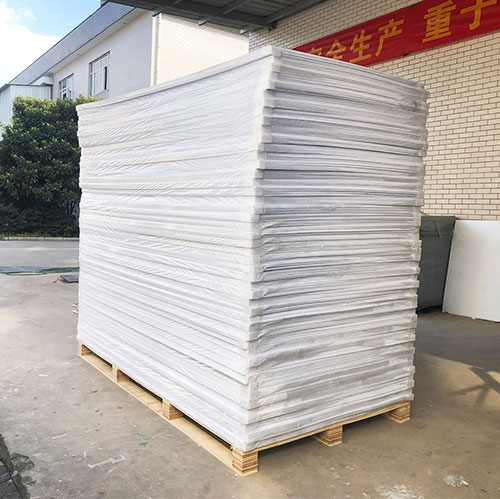
An impact-resistant plastic sheet is a type of polymer sheet designed to absorb energy and resist cracking, breaking, or deforming when subjected to force. Unlike standard plastic sheets, which may shatter or bend under high stress, impact-resistant sheets maintain their structural integrity. The design of these sheets involves selecting polymers with high toughness and often modifying their structure through additives, fillers, or copolymerization.
Impact resistance is a critical property for materials used in high-stress environments. It is measured using standardized tests, such as the Izod impact test or Charpy impact test, which assess how much energy a material can absorb before fracturing. Plastic sheets that exhibit high impact resistance are crucial in applications where durability and safety are priorities.
Polypropylene (PP) is a thermoplastic polymer widely used in the production of impact-resistant plastic sheets due to its exceptional combination of properties. PP sheets offer high toughness, excellent chemical resistance, and a low density, making them lightweight yet durable. Let’s take a closer look at why PP is a preferred material:
PP is inherently tough and can absorb significant energy without cracking. This property is enhanced through techniques like copolymerization or impact modification, which make PP sheets suitable for environments where repeated impacts are expected. For example, in packaging, PP sheets can endure the weight of stacked goods and resist damage during transportation.
One of the key advantages of PP is its low density (around 0.9 g/cm³), making it lighter than many other plastic materials like ABS or polycarbonate. Despite being lightweight, PP sheets maintain impressive mechanical strength, which reduces overall material costs and makes handling and installation easier.
PP is highly resistant to acids, alkalis, and many solvents. This chemical resistance ensures that PP sheets do not degrade or lose mechanical properties when exposed to harsh chemicals, making them suitable for industrial and laboratory applications.
Unlike rigid plastics, PP has a semi-crystalline structure that provides flexibility and excellent fatigue resistance. This means that PP sheets can bend repeatedly without cracking or breaking, a critical feature for products that undergo repeated stress or flexing.
Compared to other impact-resistant plastics like polycarbonate, PP is more affordable while still offering excellent toughness. This cost advantage makes PP sheets a practical solution for industries looking to balance performance and budget.

Understanding the technical properties of PP sheets helps manufacturers and engineers choose the right material for specific applications. Key properties include:
These properties make PP sheets suitable for a wide variety of demanding applications.
The versatility of PP impact-resistant plastic sheets makes them suitable for numerous applications across multiple industries. Here are some of the most common uses:
PP sheets are widely used for protective packaging, storage boxes, and pallets. Their toughness ensures that products remain safe during shipping and handling. Impact-resistant PP sheets can absorb shocks and vibrations, protecting delicate goods like electronics, glassware, or medical equipment.
In the automotive sector, PP sheets are utilized for interior panels, bumper reinforcements, and protective linings. Their lightweight nature reduces vehicle weight, contributing to fuel efficiency, while their impact resistance enhances safety. Additionally, PP’s chemical resistance makes it suitable for engine compartments and under-the-hood components.
PP’s resistance to chemicals makes it an excellent choice for tanks, containers, and linings in chemical processing plants. PP sheets protect against corrosion while maintaining mechanical strength, ensuring long-term durability in harsh environments.
In construction, impact-resistant PP sheets are used for partition walls, protective barriers, and cladding. Their ability to resist impact and bending helps protect surfaces from damage, while their lightweight design reduces installation effort and cost.
PP sheets are increasingly used in consumer products such as furniture, storage containers, and protective covers. The combination of durability, flexibility, and aesthetic appeal makes them a practical material choice for everyday items.
In medical settings, PP sheets are valued for their chemical resistance and ease of cleaning. They are used in work surfaces, lab equipment housings, and protective shields. Impact-resistant PP sheets ensure durability even in high-traffic or high-stress areas.
Choosing PP for impact-resistant sheets comes with several advantages:
When selecting a PP sheet for a specific application, consider the following factors:
By carefully considering these factors, manufacturers and engineers can ensure optimal performance and longevity of PP impact-resistant sheets.

Impact-resistant plastic sheets are indispensable materials for modern industrial, commercial, and consumer applications. Among the various plastics used, polypropylene (PP) stands out due to its unique blend of toughness, flexibility, chemical resistance, and affordability. From automotive components to packaging, construction, and medical applications, PP sheets offer unmatched versatility and reliability.
By understanding the properties, applications, and selection criteria of PP impact-resistant sheets, manufacturers and designers can make informed choices that enhance product durability, safety, and performance. With proper maintenance, these sheets provide a cost-effective and long-lasting solution to meet the growing demands of today’s fast-paced, high-performance world.
Contact a trusted PP sheet supplier today to explore high-quality, impact-resistant polypropylene sheets suitable for your next project. Whether you need standard thicknesses for packaging or custom solutions for industrial applications, PP sheets deliver durability, resilience, and performance you can rely on.