
- Sophia@polyflute.com
- +86 15162372874
- Mon - Sat 8:00-20:00

In today’s fast-paced logistics and packaging industry, plastic pallet layer pads have become an essential solution for improving pallet stability, product protection, and overall warehouse efficiency. Whether you are in food processing, pharmaceuticals, electronics, or retail distribution, these lightweight yet durable pads help separate and secure layers of products stacked on pallets.
But not all plastic layer pads are created equal. Among various materials like HDPE, PVC, and recycled plastics, PP (Polypropylene) has emerged as the top choice for most industries. Its superior strength, chemical resistance, and reusability make it an ideal material for manufacturing plastic pallet layer pads.
In this article, we will explore what plastic pallet layer pads are, their applications, benefits, and why PP material is the most reliable choice for modern supply chains.

Plastic pallet layer pads—also known as plastic layer pads for pallets or separator sheets—are thin, rigid plastic sheets placed between product layers on a pallet. They provide a stable base for stacking and prevent damage during transport, handling, and storage.
These pads act as a protective barrier between layers of boxes, bottles, cans, or containers. In industries like beverage bottling, each pallet may contain hundreds of items; a layer pad ensures the products stay evenly distributed and do not shift.
By using these pads, companies can maintain a consistent stacking pattern, improve load stability, and reduce packaging waste.
Plastic pallet layer pads are widely used across multiple industries due to their durability and easy cleaning properties. Here are some of the most common application scenarios:
In beverage bottling plants, millions of bottles and cans are shipped daily. Plastic layer pads are used between bottle layers to prevent movement and breakage. Since PP material is moisture-resistant and easy to clean, it meets strict hygiene requirements.
The pharmaceutical industry demands high hygiene and chemical resistance standards. PP layer pads do not absorb moisture or bacteria, making them suitable for separating medicine boxes or vials on pallets.
Electronics manufacturers use plastic pallet layer pads to separate components or finished devices, avoiding scratches, static, or impact during transport. PP’s non-conductive nature adds extra safety.
Layer pads are essential in logistics centers to improve load stability during forklift handling and long-distance shipping. They prevent product shifting and reduce packaging damage rates.
In agricultural and chemical industries, PP layer pads resist exposure to fertilizers, acids, and oils, providing a reliable and reusable barrier between products.
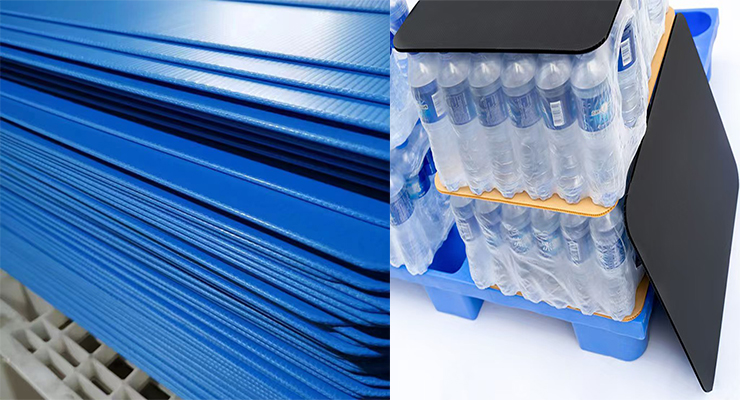
When it comes to manufacturing plastic pallet layer pads, the choice of material is crucial. Let’s explore why PP (Polypropylene) stands out as the best material option compared to alternatives like HDPE or PVC.
PP has outstanding mechanical properties, offering high tensile strength and stiffness even in thin sheet formats. This makes it perfect for supporting heavy loads stacked on pallets without bending or breaking.
The high rigidity of PP layer pads ensures that each product layer stays evenly supported, minimizing deformation and potential damage during transportation.
PP is known for its exceptional strength-to-weight ratio. A typical 4 mm thick PP pad weighs significantly less than its wooden or cardboard counterparts while lasting up to 10 times longer.
This lightweight feature reduces overall pallet weight, leading to lower shipping costs and fuel consumption. For companies handling large shipments daily, these savings can be substantial.
One of the biggest advantages of PP is its excellent resistance to water, oils, and most chemicals. Unlike paper or cardboard layer pads that absorb moisture and weaken, PP remains unaffected even in humid environments.
PP layer pads are ideal for:
This resistance ensures longer product life and easier maintenance—simply rinse or wipe, and it’s ready for reuse.
For industries like food processing, beverages, and pharmaceuticals, hygiene compliance is critical. PP is non-toxic, odorless, and approved for food contact by international standards such as FDA and EU regulations.
PP plastic pallet layer pads can be sterilized and reused multiple times without degradation, making them a sustainable alternative to disposable cardboard or fiberboard sheets.
Sustainability is a growing priority for global manufacturers. PP layer pads are 100% recyclable, and many manufacturers use recycled PP granules in production to further reduce carbon footprint.
Unlike wooden or corrugated alternatives that generate waste and require frequent replacement, PP pads can be used hundreds of times before recycling, aligning perfectly with modern circular economy principles.
PP material is easy to mold, cut, and shape, allowing for a high degree of customization. Businesses can specify:
This flexibility enables companies to create tailor-made plastic layer pads for pallets that meet their operational needs precisely.

Let’s compare PP plastic pallet layer pads with other common materials used in industrial packaging:
| Material | Durability | Water Resistance | Weight | Reusability | Cost Efficiency (Long-Term) |
|---|---|---|---|---|---|
| PP Plastic | Excellent | Excellent | Light | High | High |
| HDPE Plastic | Very Good | Excellent | Light | High | High |
| Cardboard | Poor | Low | Light | Low | Low |
| Wood | Good | Moderate | Heavy | Moderate | Medium |
| PVC | Good | Good | Medium | Medium | Medium |
As shown in the table, PP layer pads offer the best overall performance across durability, hygiene, and reusability factors, making them the most cost-effective choice for industrial users.
The use of plastic pallet layer pads goes beyond protecting products—they contribute significantly to operational efficiency and cost savings throughout the supply chain.
PP pads keep layers uniform, reducing shifting or tilting during pallet movement. This minimizes the risk of toppling, saving products and preventing accidents.
By providing even weight distribution, layer pads prevent crushing and surface damage—especially for delicate packaging like glass bottles or cans.
The smooth and consistent surface of PP pads makes stacking and de-stacking easier for both manual and automated systems, improving warehouse throughput.
Because PP layer pads are reusable hundreds of times, companies save significantly on single-use packaging materials, reducing long-term costs.
Reusable PP layer pads reduce contamination risks compared to porous materials like wood or cardboard, enhancing compliance with quality management systems (HACCP, ISO 22000, etc.).

Plastic pallet layer pads have revolutionized industrial packaging by offering a reusable, hygienic, and cost-effective solution for product stacking and protection. Among all materials available, PP (Polypropylene) stands out for its superior mechanical strength, lightweight nature, moisture resistance, and recyclability.
Whether you are in the food, beverage, pharmaceutical, or logistics sector, investing in PP plastic pallet layer pads enhances both product safety and operational efficiency.
In a world moving toward sustainable packaging and efficient supply chains, PP plastic layer pads for pallets are not just a smart choice—they’re the future of modern logistics.