
- Sophia@polyflute.com
- +86 15162372874
- Mon - Sat 8:00-20:00

In modern logistics, warehousing, and manufacturing, efficiency and cost-effectiveness are paramount. One innovation that has significantly improved storage and transportation solutions is the folding pallet. By combining durability, versatility, and space-saving design, folding pallets have become essential tools for businesses across industries. In this article, we will explore the types of folding pallets available, their unique advantages, and why they are becoming the go-to solution for businesses aiming to optimize their supply chain operations.
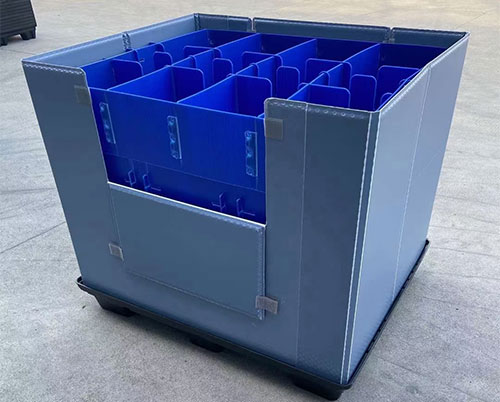
A folding pallet is a specially designed pallet that can be collapsed or folded when not in use. Unlike traditional wooden or plastic pallets, folding pallets can reduce their volume by 50% or more, allowing for more efficient storage and transport. This feature is particularly valuable in industries where pallets are frequently returned empty to warehouses or distribution centers, as it reduces transportation costs and frees up valuable warehouse space.
Folding pallets are often used in conjunction with folding pallet boxes, which are collapsible containers that can be stacked and stored compactly when empty. These combined systems offer businesses a practical solution for minimizing storage space while maintaining the structural integrity necessary for carrying heavy loads.
Folding pallets come in various designs and materials to cater to different industrial needs. The following are the most common types:
Plastic folding pallets are among the most popular options in modern logistics. They are made from high-quality, durable plastics such as polypropylene (PP) or high-density polyethylene (HDPE). Plastic pallets are lightweight, resistant to moisture and chemicals, and easy to clean, making them ideal for industries such as food, pharmaceuticals, and electronics.
Advantages of plastic folding pallets include:
Plastic folding pallets are often paired with folding plastic pallet boxes, creating a modular storage solution that allows goods to be transported safely while optimizing space when not in use.
Although less common than their plastic counterparts, wooden folding pallets remain an option for certain industries. They are typically made from high-quality, treated wood and designed to fold by collapsing the side walls or hinges.
Benefits of wooden folding pallets include:
However, wooden folding pallets may require more maintenance due to susceptibility to moisture, splinters, or pests.
For extremely heavy-duty applications, metal folding pallets offer unmatched strength and durability. These pallets are usually made from aluminum or steel and can carry significantly higher loads than plastic or wooden alternatives. Metal folding pallets are ideal for industries such as automotive, aerospace, and manufacturing, where products are heavy or irregularly shaped.
Pros of metal folding pallets:
The main drawback is the higher initial cost and weight, which may require more effort during handling and transport.
Some modern designs combine materials to create hybrid folding pallets, often featuring a metal frame with plastic or wooden slats. This design offers a balance between strength, weight, and cost, making it a versatile option for a wide range of applications.
A folding pallet box is designed to complement folding pallets. These boxes are collapsible containers that sit on top of pallets to carry bulk items. When empty, they fold flat, saving significant warehouse space.
Key benefits include:
The combination of folding pallets and folding pallet boxes has become a standard practice in modern logistics, helping businesses reduce transportation costs and improve efficiency.
The adoption of folding pallets provides numerous advantages for businesses of all sizes. Some of the most notable benefits include:
One of the most significant benefits of folding pallets is their ability to save space. When folded, these pallets occupy a fraction of the space compared to traditional pallets, making them ideal for warehouses with limited storage capacity. This space-saving feature also extends to transport vehicles, allowing for more goods to be shipped per trip.
By minimizing the space required for storage and transport, folding pallets help reduce operational costs. Fewer trips are needed to move empty pallets back to the warehouse, and storage expenses are lowered due to the reduced volume.
Many folding pallets, particularly those made from plastic, are recyclable and reusable. Their long lifespan reduces waste compared to disposable wooden pallets. In addition, efficient use of transport space decreases carbon emissions by reducing the number of trips needed for pallet returns.
Folding pallets streamline supply chain operations by simplifying handling, stacking, and storage. Their compatibility with folding pallet boxes allows for easy stacking and movement, improving overall warehouse workflow.
Plastic folding pallets are resistant to contamination, moisture, and pests, making them suitable for industries with strict hygiene standards. The smooth surfaces of plastic pallets also reduce the risk of injuries such as splinters, which can occur with wooden pallets.
Folding pallets are suitable for various industries, including food and beverage, pharmaceuticals, automotive, electronics, and general manufacturing. Their ability to support both light and heavy loads makes them adaptable to multiple applications.

Folding pallets are used in a wide range of industries and applications. Some common uses include:
By adopting folding pallets, businesses can improve both operational efficiency and sustainability, while also ensuring the safe handling of goods.
When selecting a folding pallet, several factors should be considered:
By evaluating these factors, businesses can select the most suitable folding pallet to meet their specific operational needs.

The folding pallet has emerged as a crucial solution in modern logistics, warehousing, and manufacturing. With its ability to save space, reduce costs, improve hygiene, and enhance operational efficiency, it is an invaluable tool for businesses across industries. Whether using plastic folding pallets, folding plastic pallet boxes, or hybrid designs, the benefits are clear: improved logistics, better warehouse management, and a more sustainable approach to supply chain operations.
For companies looking to optimize their storage and transportation processes, investing in folding pallets and accompanying folding pallet boxes is not just a smart choice—it is a necessity in today’s competitive business environment.